
Belfast: Private Black Cab Troubles Tour & Murals Pickup
 Super deal


Summary
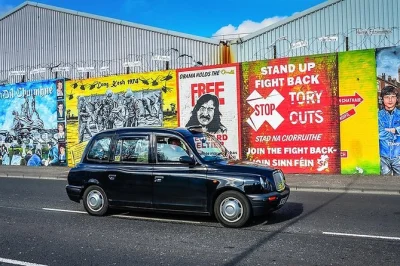
Murals and memories along belfast’s peace wall with locals who lived it
You’ll ride through Belfast in a black cab with a local guide who lived the Troubles firsthand. See powerful murals on Falls Road and Shankill, sign your name on the Peace Wall, and hear personal stories behind each stop—from Crumlin Road Gaol to Saint Peter’s Cathedral. This isn’t just sightseeing; you’ll feel Belfast’s history under your skin.
 2h
2h

Step-by-step itinerary
Day 1 — Explore Belfast Troubles and Peace sites
- City centre pick up
- See murals of international struggles
- Visit Falls Road murals
- View Saint Peters Cathedral exterior
- Stop at Belfast Peace Wall
- Explore Bombay Street history
- Tour Shankill Road murals
- Photo stop at Shankill political murals
- Pass by Crumlin Road Gaol
- Visit local church with unique altar

Top questions

How long is the Belfast black cab Troubles tour?
The private Belfast Troubles cab tour lasts approximately 2 hours.
Does this tour include pickup from my hotel?
Pickup is included within a 1 km radius of Belfast City Hall; other pickups can be arranged for an extra charge.
What sites do we visit on the black cab tour?
You’ll visit Falls Road, Shankill Road, Crumlin Road Gaol, Bombay Street, Saint Peter’s Cathedral, and the Belfast Peace Wall.
Can I write on the Belfast Peace Wall during the tour?
Yes, you can add your name or a quote to the Peace Wall during your visit.
Is this Troubles taxi tour suitable for children?
Children are welcome but must be accompanied by an adult throughout the tour.
Who leads the Belfast Troubles taxi tours?
The tours are led by original black cab drivers who lived through the Troubles in Belfast.
Are there stops for photos during the mural tour?
Yes, there are several stops along Falls Road and Shankill where you can take photos of political murals.
What languages are available for this tour?
The main language is English; check directly if you need another language option.

What’s included
Your day includes pickup from central Belfast (within 1 km of city hall), all transport by classic black cab with a local driver-guide who shares personal stories throughout each stop—from mural-lined streets to Crumlin Road Gaol—and time to write your own message on the Peace Wall before returning to town.

I’ll admit, I was nervous before this Belfast black cab tour. There’s something about sitting in the back of a cab with someone who’s actually lived through the Troubles—our driver, Tommy, had that calm but watchful way about him. He picked us up near city hall (right on time, which I appreciated because I’m always early and awkward), and as soon as we pulled away, he started sharing bits of his own story. The city felt different through his eyes—like every street corner had its own secret.
We rolled down Falls Road first. The murals were bigger than I’d pictured—some bright and hopeful, others almost heavy. Tommy pointed out one painted for Palestine and another for Cuba; he said sometimes people come just to see those. I tried to take photos but honestly, it felt strange at first—like I was peeking into someone else’s argument. The smell of fresh paint hung in the air near one wall (he joked they’re always touching them up). When we stopped at Bombay Street, he grew quiet for a second before explaining what happened there in ‘69. It was hard not to feel that weight.
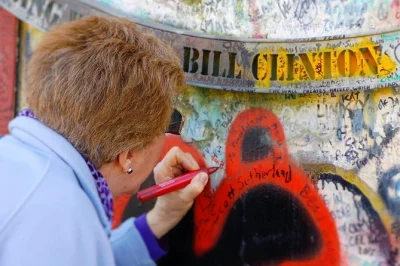
The Peace Wall was next—massive, covered in names and scribbled wishes for peace from all over the world (even Lady Gaga wrote something here). Tommy handed me a marker so I could add my own line. My handwriting looked ridiculous next to Morgan Freeman’s neat scrawl but whatever—I guess that’s part of it. On Shankill Road, things shifted again; more Union Jacks fluttering above us, different faces painted on the walls. A couple of locals waved as we got out for photos—felt weirdly normal after all that tension.
Crumlin Road Gaol looked cold even from outside—the kind of place you don’t forget once you’ve seen it up close. Tommy told us about escapes and hangings like he was remembering an old neighbor; I still think about how matter-of-fact he sounded. We finished at Saint Peter’s Cathedral, sunlight catching on the stonework and making everything look softer than it probably deserved after all those stories. The tour ended but my head kept spinning with questions—about history, about people who stay put when things get hard. Not sure any guidebook could give you that feeling.
Similar tours
 Belfast: Black Taxi Cab Tour with Murals & Peace Wall
★★★★★★★★★★ 4.86 (125) From US$ 109.47
Belfast: Black Taxi Cab Tour with Murals & Peace Wall
★★★★★★★★★★ 4.86 (125) From US$ 109.47
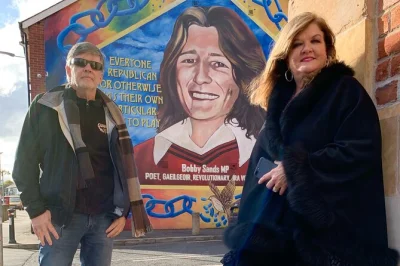 Belfast: Black Cab Troubles Tour & Murals with Local Driver
★★★★★★★★★★ 4.72 (180) From US$ 113.58
Belfast: Black Cab Troubles Tour & Murals with Local Driver
★★★★★★★★★★ 4.72 (180) From US$ 113.58
 Belfast: Private Black Taxi Troubles Tour & Peace Wall
★★★★★★★★★★ 4.91 (104) From US$ 121.81
Belfast: Private Black Taxi Troubles Tour & Peace Wall
★★★★★★★★★★ 4.91 (104) From US$ 121.81
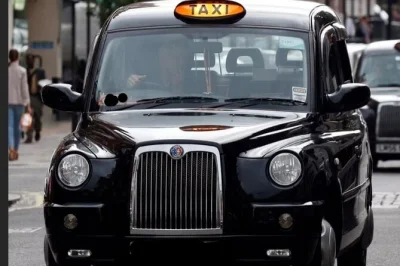 Belfast: Private Political Murals & Troubles History Tour
★★★★★★★★★★ 4.84 (197) From US$ 75.27
Belfast: Private Political Murals & Troubles History Tour
★★★★★★★★★★ 4.84 (197) From US$ 75.27
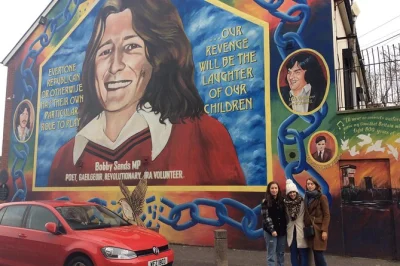 Belfast: Peace Wall Taxi Tour with Local Stories & Pickup
★★★★★★★★★★ 4.91 (160) From US$ 54.74
Belfast: Peace Wall Taxi Tour with Local Stories & Pickup
★★★★★★★★★★ 4.91 (160) From US$ 54.74
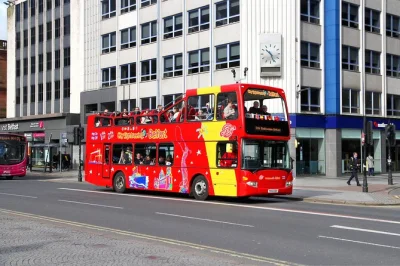 Belfast: Hop-On Hop-Off Bus Tour with Titanic & Peace Wall
★★★★★★★★★★ 4.35 (2161) From US$ 26.00
Belfast: Hop-On Hop-Off Bus Tour with Titanic & Peace Wall
★★★★★★★★★★ 4.35 (2161) From US$ 26.00
 Belfast: Black Taxi Tour of The Troubles, Peace Wall & Murals
★★★★★★★★★★ 4.83 (286) From US$ 99.91
Belfast: Black Taxi Tour of The Troubles, Peace Wall & Murals
★★★★★★★★★★ 4.83 (286) From US$ 99.91
 Belfast: Private Black Cab Troubles Tour & Peace Walls
★★★★★★★★★★ 4.92 (243) From US$ 116.32
Belfast: Private Black Cab Troubles Tour & Peace Walls
★★★★★★★★★★ 4.92 (243) From US$ 116.32
 Belfast: Political Mural Taxi Tour & Peace Wall Stories
★★★★★★★★★★ 4.98 (1369) From US$ 54.74
Belfast: Political Mural Taxi Tour & Peace Wall Stories
★★★★★★★★★★ 4.98 (1369) From US$ 54.74
 Belfast: Troubles Murals Tour with Local Stories & Pickup
★★★★★★★★★★ 4.96 (599) From US$ 68.43
Belfast: Troubles Murals Tour with Local Stories & Pickup
★★★★★★★★★★ 4.96 (599) From US$ 68.43
 Belfast: Political Taxi Tour, Murals & Peace Wall Stories
★★★★★★★★★★ 4.86 (500) From US$ 51.32
Belfast: Political Taxi Tour, Murals & Peace Wall Stories
★★★★★★★★★★ 4.86 (500) From US$ 51.32
 Belfast: Black Taxi Mural Tour with Peace Wall & Pickup
★★★★★★★★★★ 4.98 (126) From US$ 50.64
Belfast: Black Taxi Mural Tour with Peace Wall & Pickup
★★★★★★★★★★ 4.98 (126) From US$ 50.64
 Secure checkout on viator.com


 Do you need help planning your next activity?


