

 +507 6792-0894


Private Fez Medina Walking Tour: Kairaouine, Tannery & More





Summary
Discover Fes El Bali: Guided Old City Experience
If you want to see Fez beyond postcards—its hidden clocks, living crafts, and real daily life—this private medina tour gives you just that. You’ll walk winding alleys with someone who knows every shortcut and story behind each door.

Stepping through Bab Boujloud—the Blue Gate—felt like entering another world. The air was thick with the scent of fresh bread and leather, and the hum of shopkeepers calling out their wares echoed off the old stone walls. Our guide, Youssef, started us off on the main street of the medina, pausing by a centuries-old hydraulic clock tucked above a quiet doorway. He explained how it once marked time for scholars and merchants alike—honestly, I’d have walked right past it if he hadn’t pointed it out.
The Nejjarine Museum was next—a cool escape from the midday sun. Inside, we wandered among carved cedar chests and delicate inlaid doors that told stories of traders who passed through here long before us. The building itself is a piece of art; sunlight filtered through latticework windows, casting patterns on tiled floors. Youssef shared how this place used to be a caravanserai for merchants hauling goods across Morocco.
We made our way to Zaouia Moulay Idriss II, where locals quietly paid respects at the founder’s tomb. The smell of incense drifted out into the alleyway. Even if you’re not religious, there’s something grounding about standing in such an old sacred space—our guide explained some mausoleum customs I’d never heard before.
Kairaouine Mosque came after—a highlight for me. It’s not just a mosque but also the oldest university still operating in the world (founded in 859). We couldn’t go inside as non-Muslims, but peeking through the open doors gave us a glimpse of green-tiled courtyards and students hurrying between lessons. Youssef filled us in on its history and why scholars still come here from all over North Africa.
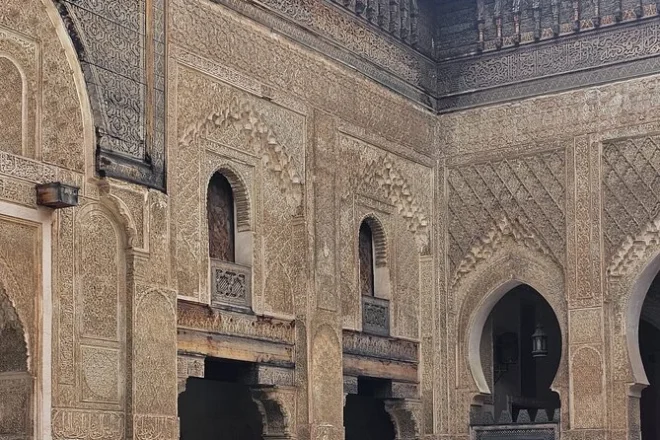
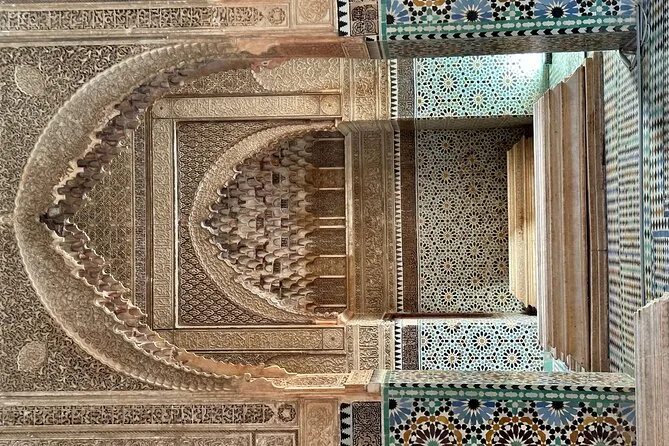
The Al-Attarine Madrasa was another gem—so much intricate tilework and wood carving everywhere you looked. Built by Sultan Uthman Abou Said in the 14th century, it’s considered one of the Marinid dynasty’s finest achievements. I tried to imagine what it must’ve been like studying theology here centuries ago.
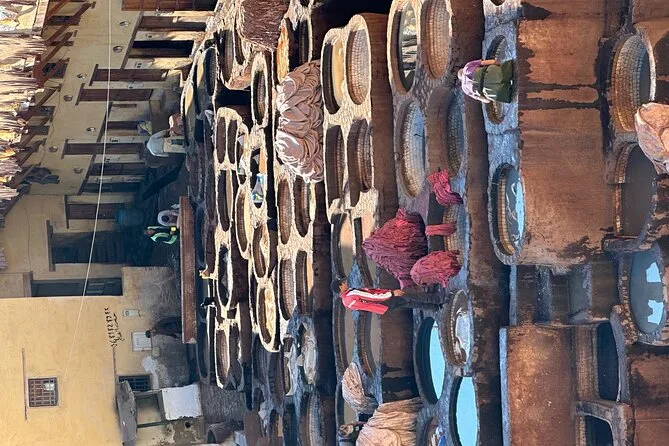
No visit to Fez is complete without seeing Chouara Tannery. We climbed up to a terrace overlooking vats of dye—reds, yellows, blues—and watched workers turning animal hides into leather using methods that haven’t changed since medieval times. The smell is strong (mint sprigs help!), but seeing this ancient craft up close is worth it.
Our last stop was Seffarine Square—the clang of hammers on copper rang out as artisans shaped pots and trays by hand. It’s noisy but fascinating; you can watch them work or even try your hand at hammering if you ask nicely.
 3h–4h
3h–4h

Step-by-step itinerary
Day 1 — Explore Fez Medina Highlights
- This is main street of the old medina with hydraulic clock
- Visit Blue Gate main entrance
- Explore Nejjarine Wood Museum
- Visit Zaouia Moulay Idriss II mausoleum
- Tour Quaraouine University
- See Medersa Of Attarin theology school
- View Chouara Tannery and leather making
- Walk through coppersmiths area

Top questions

Is this Fez medina tour suitable for wheelchairs or strollers?
Yes! All areas are wheelchair accessible and strollers are welcome throughout the route.
Can I bring my service animal?
Absolutely—service animals are allowed on this tour.
Do we enter all monuments?
You’ll enter most sites like museums and madrasas; mosques may be viewed from outside unless you’re Muslim due to local rules.
How long does the tour take?
The full experience usually lasts around 3-4 hours depending on your pace and interests.

What’s included
Your own private local guide leads you through Fez Medina’s highlights—including museum entry fees—at your pace. Wheelchair access is available everywhere along the route.
 Super deal
  Free booking, free cancellation.
  Don't lose your place.


 Do you need help planning your next activity?
  +507 6792-0894


