
10-Day Private Morocco Tour: Marrakech, Sahara & Chefchaouen
 Super deal









Summary
North and South Morocco Journey: Desert, Medinas & Ancient Sites
You’ll experience Morocco’s real contrasts—from Marrakech’s lively souks to quiet desert sunrises in Merzouga, ancient medinas in Fes, Roman ruins at Volubilis, and Chefchaouen’s blue-washed streets. This private tour blends history, adventure, food, and local culture into one unforgettable journey.
 10d
10d

Step-by-step itinerary
Day 1 — Arrival and Transfer to Marrakech
- Arrival and transfer to hotel in Marrakech
Day 2 — Marrakech City Tour
- Visit Saadian tombs, Dar Si Said Museum, Majorel Gardens, Koutoubia Minaret
- Explore souks and Djemaa El Fna Square
Day 3 — Kasbah Ait Benhaddou & Ouarzazate
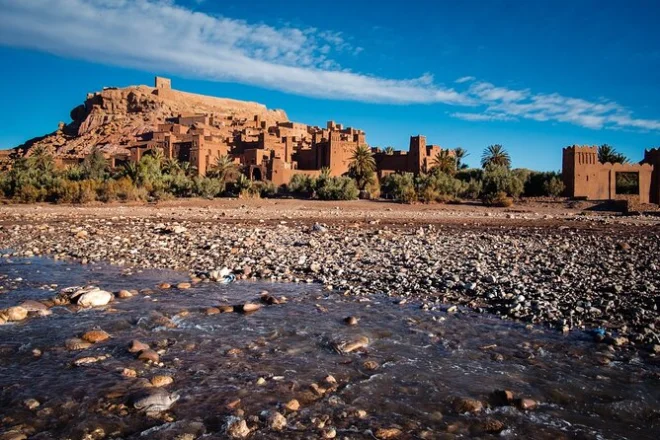
- Travel to Ouarzazate via Tizi-N-Tichka pass, visit Kasbah Ait Benhaddou, Atlas Studios, Taourirt Kasbah
Day 4 — Todra Gorges to Merzouga Dunes
- Drive through Dadès valley and Todra Gorges to Merzouga
- 4x4 ride to Merzouga dunes
Day 5 — Merzouga Sunrise and Travel to Fes
- Camel ride at sunrise
- Travel to Fes with stop in Midelt and Azrou
Day 6 — Fes Medina Tour
- Guided tour of Fes medina including royal palace, Boujloud gate, Attarine Souk, Nejjarin Fountain, tanneries, Kairaouine Mosque
Day 7 — Meknes, Volubilis & Chefchaouen
- Visit Meknes, Moulay Idris, Volubilis, then travel to Chefchaouen
Day 8 — Chefchaouen to Rabat
- Travel to Rabat and explore city architecture
Day 9 — Rabat to Casablanca
- Explore Casablanca including Hassan Mosque
Day 10 — Departure from Casablanca
- Transfer to airport for departure

Top questions

Is this Morocco tour suitable for families or older travelers?
Yes! The itinerary works for most ages and fitness levels. Vehicles are comfortable and guides adjust pacing as needed.
What kind of accommodation will we stay in?
You’ll stay in 4-star hotels or traditional riads/kasbahs—clean rooms with local character and friendly staff.
Are meals included during this trip?
Breakfasts are included daily; some dinners too (especially in remote areas). Lunches are usually at local restaurants or stops along the way.
Do guides speak English?
Yes, your main driver-guide speaks English fluently; local guides in cities do as well.
Can you accommodate dietary restrictions?
Just let us know your needs when booking—we’ll do our best to arrange suitable meals throughout your journey.

What’s included
Your private tour includes 8 nights’ accommodation in 4-star hotels or authentic riads/kasbahs (breakfast daily), all ground transport by air-conditioned vehicle, an English-speaking driver-guide throughout your trip plus expert local guides in key cities like Marrakech and Fes. Infant seats available if needed; service animals welcome. Most fitness levels can join comfortably.

Landing in Casablanca or Marrakech, the air feels different—warmer, with a hint of spice and diesel from the street vendors’ carts. Our driver was waiting right outside arrivals, waving a little sign with my name. The drive into Marrakech was a blur of red city walls and palm trees. That first night, I couldn’t sleep much—too excited and the city noise just hummed in the background. We stayed in a riad tucked away in the old medina; I still remember the sweet mint tea they served us as we checked in.
Marrakech is wild and full of life. We wandered through Saadian tombs, got lost in the Dar Si Said Museum (the woodwork there is unreal), and took a breather in Majorelle Gardens—so much blue everywhere. The Koutoubia Minaret stands tall above everything; you can spot it from almost anywhere in the city. Later, our guide led us into the souks—a maze of colors, smells, and sounds. I nearly tripped over a basket of oranges while dodging a motorbike. Djemaa El Fna Square comes alive at dusk: snake charmers, acrobats, even a guy with a monkey on his shoulder tried to get us to take photos.
The road to Ouarzazate twists up through Tizi-N-Tichka pass—hairpin bends and tiny Berber villages clinging to hillsides. We stopped at Aït Ben Haddou for lunch (try the chicken tagine if you get the chance). Walking through the kasbah felt like stepping onto a movie set—turns out they’ve filmed loads of movies here. Ouarzazate itself is quieter but has its own charm; we toured Atlas Studios and wandered around Taourirt Kasbah as the sun started to dip.
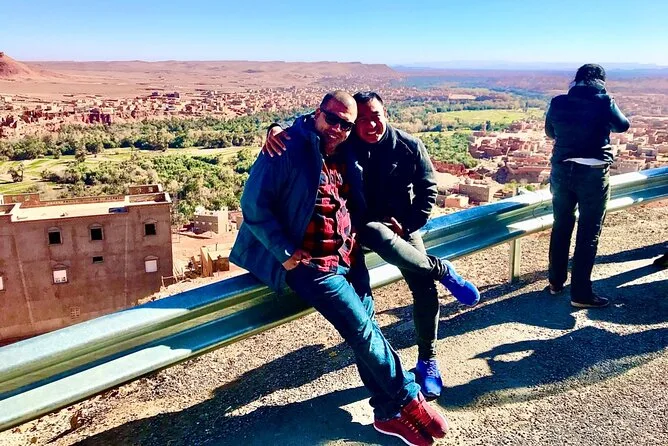
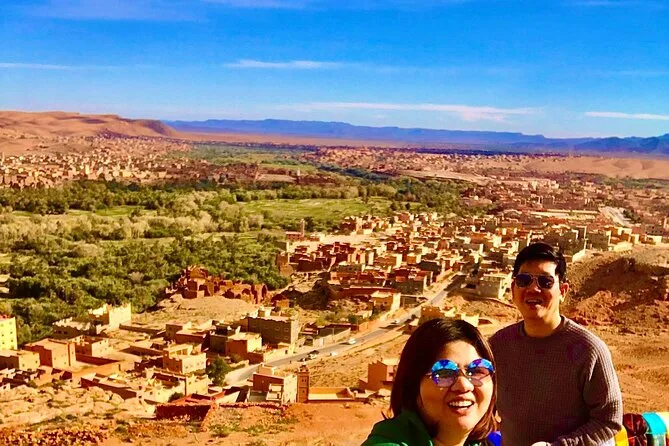
The next day was all about landscapes. The Dadès Valley was dotted with blooming roses (in spring you can actually smell them from the car window), and we passed dozens of old kasbahs along the river. Todra Gorge was something else—sheer cliffs rising up on both sides, echoing every footstep. By late afternoon we reached Erfoud and switched to 4x4s for Merzouga. That first glimpse of the Sahara dunes at sunset is something I’ll never forget—the sand glows almost orange.
Sunrise in Merzouga is worth waking up early for—even if you’re not a morning person. Riding camels across cool sand while everything turns gold is surreal. Breakfast back at the kasbah tasted even better after that ride. Heading north toward Fes, we stopped in Midelt for lunch—mountain air here feels crisp compared to the desert heat—and watched as pine forests gave way to rocky peaks near Azrou. Our guide explained how Berber tribes still use these routes for trading.
Fes is another world entirely: ancient walls, narrow lanes packed with people selling everything from fresh figs to handwoven carpets. We started at the royal palace gates before ducking into Boujloud (the blue gate). The medina is easy to get lost in—luckily our local guide knew every shortcut. The tanneries hit you with their strong smell before you even see them; watching workers dye leather by hand is oddly mesmerizing. Lunch was in a tiny restaurant hidden behind an unmarked door—best couscous I’ve had so far.
The drive to Chefchaouen took us past Meknes and Volubilis—the Roman ruins are scattered across rolling hills, storks nesting on broken columns. Chefchaouen itself looks like it’s been dipped in blue paint; every alleyway seems more photogenic than the last. Women from nearby villages sell woven baskets in little squares, and there’s always someone offering sweet pastries or olives from their stall.
Rabat surprised me—it’s more modern but still layered with history: Phoenician ruins next to French-style boulevards. Casablanca was our last stop; we visited Hassan II Mosque (it really does sit right on the ocean) before grabbing one final coffee at a seaside café. Early flight home came too soon—I left feeling like I’d only scratched the surface.
Similar tours
 Morocco Imperial Cities & Sahara: 10-Day Private Tour with Riads
★★★★★★★★★★ 4.98 (175) From US$ 1,496.99
Morocco Imperial Cities & Sahara: 10-Day Private Tour with Riads
★★★★★★★★★★ 4.98 (175) From US$ 1,496.99
 Morocco: 7-Day Tangier to Marrakech Tour with Desert Camp
★★★★★★★★★★ 4.94 (271) From US$ 1,577.57
Morocco: 7-Day Tangier to Marrakech Tour with Desert Camp
★★★★★★★★★★ 4.94 (271) From US$ 1,577.57
 Casablanca to Marrakech Private Desert Tour & Camel Trek
★★★★★★★★★★ 5.00 (55) From US$ 2,343.69
Casablanca to Marrakech Private Desert Tour & Camel Trek
★★★★★★★★★★ 5.00 (55) From US$ 2,343.69
 Morocco: Private tour from Casablanca with desert camp
★★★★★★★★★★ 5.00 (34) From US$ 1,643.52
Morocco: Private tour from Casablanca with desert camp
★★★★★★★★★★ 5.00 (34) From US$ 1,643.52
 9-Day Morocco Tour from Casablanca: Desert, Fez & Marrakech
★★★★★★★★★★ 5.00 (28) From US$ 2,525.79
9-Day Morocco Tour from Casablanca: Desert, Fez & Marrakech
★★★★★★★★★★ 5.00 (28) From US$ 2,525.79
 Morocco: Sahara Desert & Imperial Cities Private 10-Day Tour
★★★★★★★★★★ 4.96 (303) From US$ 2,995.70
Morocco: Sahara Desert & Imperial Cities Private 10-Day Tour
★★★★★★★★★★ 4.96 (303) From US$ 2,995.70
 Morocco: Private 10-day tour from Marrakech
★★★★★★★★★★ 4.97 (29) From US$ 1,380
Morocco: Private 10-day tour from Marrakech
★★★★★★★★★★ 4.97 (29) From US$ 1,380
 Marrakech to Merzouga: Sahara Camel Ride & Desert Camp Tour
★★★★★★★★★★ 4.90 (1777) From US$ 145.67
Marrakech to Merzouga: Sahara Camel Ride & Desert Camp Tour
★★★★★★★★★★ 4.90 (1777) From US$ 145.67
 Marrakech to Fes: Sahara Desert Camel Trek & Ait Ben Haddou
★★★★★★★★★★ 4.93 (433) From US$ 187.97
Marrakech to Fes: Sahara Desert Camel Trek & Ait Ben Haddou
★★★★★★★★★★ 4.93 (433) From US$ 187.97
 Marrakech to Fes: Sahara Desert Tour with Camel Ride & Luxury Camp
★★★★★★★★★★ 5.00 (132) From US$ 798.85
Marrakech to Fes: Sahara Desert Tour with Camel Ride & Luxury Camp
★★★★★★★★★★ 5.00 (132) From US$ 798.85
 Marrakech to Merzouga: 3-Day Desert Tour with Camel Rides
★★★★★★★★★★ 4.91 (10178) From US$ 129.23
Marrakech to Merzouga: 3-Day Desert Tour with Camel Rides
★★★★★★★★★★ 4.91 (10178) From US$ 129.23
 Marrakech to Fes: 3-Day Sahara Desert Tour, Camel Trek & Kasbahs
★★★★★★★★★★ 4.87 (6687) From US$ 187.03
Marrakech to Fes: 3-Day Sahara Desert Tour, Camel Trek & Kasbahs
★★★★★★★★★★ 4.87 (6687) From US$ 187.03


 Do you need help planning your next activity?


