
Teotihuacan Sunrise Tour from Mexico City with Bakery Stop
 Super deal


Summary
Early bakery aroma, ancient murals and sunrise at Teotihuacan
You’ll step into a quiet Mexico City morning with fresh pastries in hand before heading out to Teotihuacan for sunrise. Walk ancient streets with a local guide who brings old stories to life, see preserved murals in Tetitla barrio, and climb pyramids before most tourists arrive. It’s not just history—it’s feeling part of something bigger for a few hours.
 5h
5h

Step-by-step itinerary
Day 1 — Teotihuacan tour with bakery stop
- Stop at Roma bakery for coffee
- Travel from Mexico City to Teotihuacan
- Explore Avenue of the Dead and Pyramid of the Sun
- Visit Tetitla ancient barrio and murals
- Discover Temple of the Feathered Serpent
- Return to Mexico City

Top questions

Is hotel pickup included for this Teotihuacan sunrise tour?
No, pickup is not included—the meeting point is at an iconic bakery in Roma neighborhood.
How long does it take to get from Mexico City to Teotihuacan?
The drive usually takes around an hour depending on traffic leaving Mexico City.
Do you visit any places besides Teotihuacan on this tour?
Yes, there’s a stop at a popular bakery in Roma for coffee and pastries before heading to Teotihuacan.
Is entry to Teotihuacan included?
Yes, admission tickets to the archaeological site are included in your booking.
What’s special about visiting Tetitla during this day trip?
Tetitla is an ancient barrio within Teotihuacan where you can see preserved murals showing daily life from centuries ago.
Is bottled water provided during the tour?
Yes, bottled water is included for all travelers on this tour.
Are guides certified or official?
Yes, tours are led by certified local guides who share stories and context throughout your visit.
Can travelers with limited mobility join this tour?
This tour isn’t recommended for travelers with spinal injuries or poor cardiovascular health due to walking and pyramid steps.
Are service animals allowed on this tour?
Yes, service animals are allowed during this experience.

What’s included
Your day includes meeting at a favorite Roma bakery for coffee and pastries before riding in an air-conditioned vehicle with bottled water toward Teotihuacan. Entry tickets are covered—you’ll explore with a certified local guide who shares stories as you walk through ancient streets and murals before returning to Mexico City together.

We were barely awake, shuffling out of the van into the soft morning light in Roma. The city felt quieter than usual—just a few locals on their way to work and the smell of pan dulce drifting from the bakery. Our guide, Ana, handed us coffee (thank god) and suggested we try conchas. I bit into one and immediately got why people rave about Mexican bakeries—warm, sweet, a little messy. It was still dark enough that it felt like we had a secret head start on the day.
The drive out of Mexico City surprised me—I’d expected endless buildings, but suddenly there were patches of green and those colorful roadside shrines. Ana pointed out how the neighborhoods changed as we crossed into Estado de México. She told us stories about her grandmother’s first visit to Teotihuacan (I could tell she was proud), and I watched the city fade in the rearview mirror while everyone got a bit quieter. There’s something about leaving behind all that noise that makes you pay attention differently.
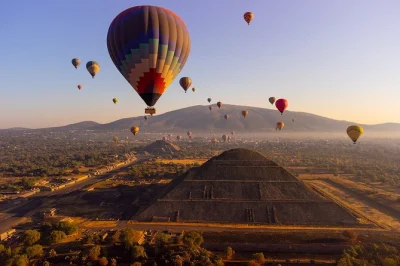
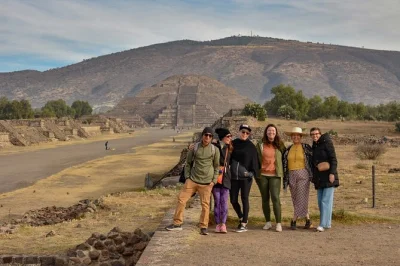
Arriving at Teotihuacan just as the sun started to climb over the Pyramid of the Sun was... well, I didn’t expect it to feel so quiet for such a big place. We walked along the Avenue of the Dead—the stones cold under my shoes—and Ana explained how this wasn’t just a tourist spot but once a whole city full of families and rituals. She showed us faded murals in Tetitla; I tried to make sense of them but mostly just wondered what those people would think if they saw us now, squinting at their walls centuries later.
I’m not sure what I expected from climbing pyramids before breakfast, but standing up there with wind in my face and Mexico sprawling out below—it hit different than any photo ever could. Someone joked about needing more coffee for the way down (fair). On our way back through Temple of the Feathered Serpent, Ana pointed out tiny details I’d have missed alone—serpents carved into stone, colors still clinging after all these years. Even now, days later, I keep thinking about that first bite of bread and how it somehow set up everything that came after.
Similar tours
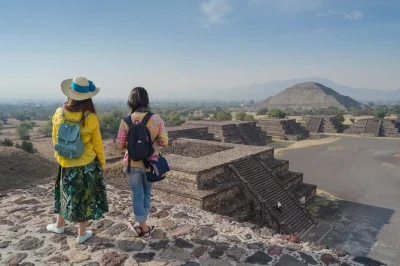 Teotihuacan: Cave Breakfast, Obsidian Workshop & Pickup CDMX
★★★★★★★★★★ 4.95 (224) From US$ 106.53
Teotihuacan: Cave Breakfast, Obsidian Workshop & Pickup CDMX
★★★★★★★★★★ 4.95 (224) From US$ 106.53
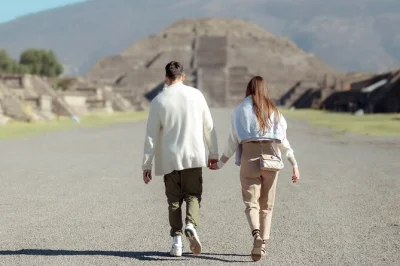 Teotihuacan Pyramids: Early Morning Express Tour & Pickup
★★★★★★★★★★ 4.92 (506) From US$ 68.65
Teotihuacan Pyramids: Early Morning Express Tour & Pickup
★★★★★★★★★★ 4.92 (506) From US$ 68.65
 Mexico City: Teotihuacan Pyramids & Guadalupe Basilica Day Trip
★★★★★★★★★★ 5.00 (94) From US$ 195
Mexico City: Teotihuacan Pyramids & Guadalupe Basilica Day Trip
★★★★★★★★★★ 5.00 (94) From US$ 195
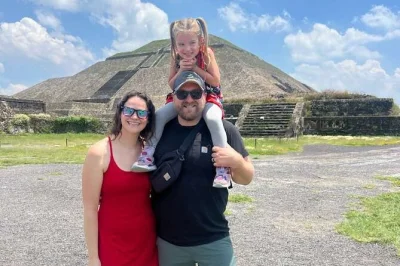 Mexico City to Teotihuacan: Pyramids, Basilica & Local Guide
★★★★★★★★★★ 5.00 (35) From US$ 177.55
Mexico City to Teotihuacan: Pyramids, Basilica & Local Guide
★★★★★★★★★★ 5.00 (35) From US$ 177.55
 Teotihuacan Pyramids & Cave: Small Group Tour with Pickup
★★★★★★★★★★ 4.92 (172) From US$ 35
Teotihuacan Pyramids & Cave: Small Group Tour with Pickup
★★★★★★★★★★ 4.92 (172) From US$ 35
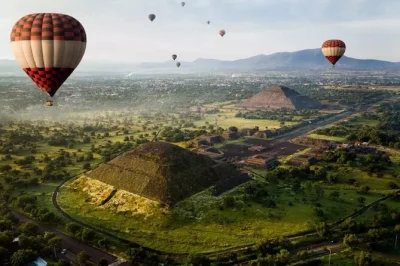 Teotihuacan: Balloon Flight, Cave Breakfast & CDMX Pickup
★★★★★★★★★★ 4.92 (1444) From US$ 147.96
Teotihuacan: Balloon Flight, Cave Breakfast & CDMX Pickup
★★★★★★★★★★ 4.92 (1444) From US$ 147.96
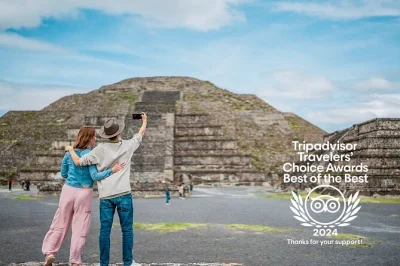 Mexico City: Teotihuacan Pyramids, Guadalupe Shrine & Tlatelolco Day Trip
★★★★★★★★★★ 4.80 (12302) From US$ 46.40
Mexico City: Teotihuacan Pyramids, Guadalupe Shrine & Tlatelolco Day Trip
★★★★★★★★★★ 4.80 (12302) From US$ 46.40
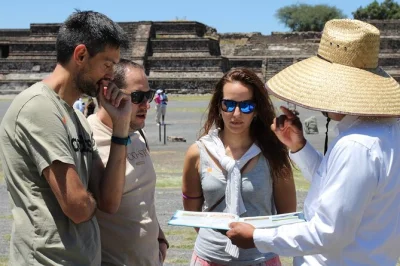 Teotihuacán Day Trip from Mexico City: Pyramids, Tastings & Pickup
★★★★★★★★★★ 4.81 (1397) From US$ 56.22
Teotihuacán Day Trip from Mexico City: Pyramids, Tastings & Pickup
★★★★★★★★★★ 4.81 (1397) From US$ 56.22
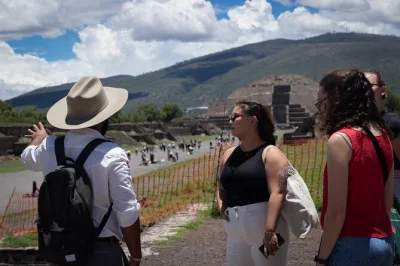 Teotihuacan: Guided Tour with Cave Breakfast & Pyramid Walk
★★★★★★★★★★ 4.97 (741) From US$ 75.32
Teotihuacan: Guided Tour with Cave Breakfast & Pyramid Walk
★★★★★★★★★★ 4.97 (741) From US$ 75.32
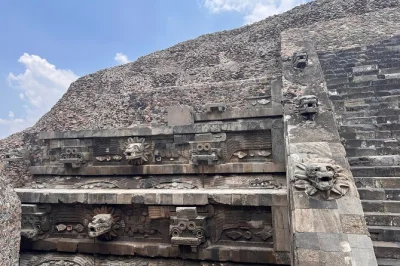 Teotihuacán Pyramids: Private Day Trip from Mexico City
★★★★★★★★★★ 4.84 (564) From US$ 120
Teotihuacán Pyramids: Private Day Trip from Mexico City
★★★★★★★★★★ 4.84 (564) From US$ 120
 Teotihuacan Balloon Flight & Cave Breakfast from CDMX
★★★★★★★★★★ 4.93 (2564) From US$ 159.73
Teotihuacan Balloon Flight & Cave Breakfast from CDMX
★★★★★★★★★★ 4.93 (2564) From US$ 159.73
 Teotihuacan Pyramids & La Gruta Cave Lunch Early Tour
★★★★★★★★★★ 4.81 (1186) From US$ 49
Teotihuacan Pyramids & La Gruta Cave Lunch Early Tour
★★★★★★★★★★ 4.81 (1186) From US$ 49


 Do you need help planning your next activity?


