
Shirakawago & Kanazawa: Day Trip with UNESCO Village & Garden
 Super deal


Summary
Shirakawago village roofs, Kenrokuen’s quiet paths, teahouse lanes
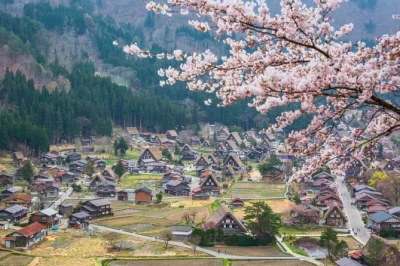
You’ll start your day leaving Kanazawa for Shirakawago village—those steep thatched roofs really do look like hands pressed together—and have time to explore at your own pace before sharing a simple local lunch. Then wander Kenrokuen Garden’s winding paths with your guide before ending among teahouses in Higashi Chaya district. It’s not flashy, but you’ll feel something linger after.
 8h 30m

Step-by-step itinerary
Day 1 — Shirakawago and Kanazawa sightseeing
- Meet at Kanazawa City Centennial Monument
- Bus to Shirakawago village
- Explore Shirakawago and traditional houses
- Bus to Kenrokuen Garden
- Visit Kenrokuen Garden
- Walk to Higashi Chaya district
- Explore Higashi Chaya historic district
- Return to Kanazawa Station

Top questions

How long is the day trip from Kanazawa to Shirakawago?
The tour lasts most of the day, starting at Kanazawa City Centennial Monument and returning to Kanazawa Station after visiting all stops.
Is lunch included on this Shirakawago & Kanazawa tour?
A traditional lunch is included during your free time in Shirakawago village.
Are entrance fees for Kenrokuen Garden included?
Entry to Kenrokuen Garden is included if you select the full Shirakawago & Kanazawa option.
Where does the tour start and end?
The tour starts at Kanazawa City Centennial Monument; it ends either at Kenrokuen Garden or back at Kanazawa Station depending on your selected option.
Is there a local guide on this day trip?
A bilingual guide (English/Spanish) leads the group throughout the day.
Can I join just for Shirakawago without visiting Kenrokuen or Higashi Chaya?
Yes, there is an option for only visiting Shirakawago; in that case your tour ends at Kenrokuen Garden.
What kind of transportation is used between stops?
A comfortable bus takes travelers between all main destinations on this itinerary.
Is this tour suitable for people with limited mobility?
A moderate level of physical fitness is recommended due to walking on uneven surfaces.

What’s included
Your day includes transportation from central Kanazawa, entry fees for Kenrokuen Garden if you choose that option, plus a bilingual English-Spanish guide throughout—and there’s a traditional lunch waiting for you in Shirakawago before heading back in the afternoon or evening depending on your route.

We were already halfway to Shirakawago when I realized I’d forgotten to check the weather—didn’t matter. The bus windows started fogging up as we climbed into the mountains from Kanazawa, and our guide, Emi, pointed out how the steep thatched roofs were built for heavy snow. She said “gassho-zukuri” means hands in prayer. I tried to repeat it—Li laughed at my accent (fair). The smell of damp wood hit me as soon as we stepped off the bus; it was early but a few locals were already setting out pickles and rice crackers on little tables outside their houses.
I wandered down a muddy lane past one of those huge old farmhouses. There was this silence you don’t get in cities—just crows somewhere far off, and the sound of water running under the bridges. Lunch was simple: miso soup, grilled river fish, sticky rice. I still think about that miso, honestly—maybe it was the cold air or just being hungry from walking around. We had free time to poke around; I ended up chatting with an old man who showed me his family’s roof beams (he said they last generations if you take care).
Back in Kanazawa, Kenrokuen Garden felt almost too perfect after Shirakawago’s rough edges. Emi led us along winding paths between mossy stones and over arched bridges—she knew every shortcut and told us which trees bloom first in spring. At one point I just stood by a pond watching koi flicker under the surface while someone nearby played a bamboo flute. If you choose the full day trip from Kanazawa to Shirakawago and Kenrokuen, you get this slow shift from mountain quiet to garden calm—it sneaks up on you.
The last bit took us through Higashi Chaya district, where gold leaf shops line narrow streets and teahouses glow behind wooden screens. There were schoolkids on a field trip practicing bows outside one of them—one girl giggled when her friend messed up (reminded me of my own school days). We didn’t see any geishas but Emi told us stories about them anyway. By the time we got back to Kanazawa Station, my legs were tired but my head was full of details I didn’t expect to remember.
Similar tours
 Shirakawa-go & Kanazawa: UNESCO Village Day Trip with Food Stops
★★★★★★★★★★ 4.92 (760) From US$ 80.26
Shirakawa-go & Kanazawa: UNESCO Village Day Trip with Food Stops
★★★★★★★★★★ 4.92 (760) From US$ 80.26
 Shirakawa-go & Kanazawa: Day Trip with Wagashi & Gold Leaf
★★★★★★★★★★ 4.97 (5001) From US$ 120.39
Shirakawa-go & Kanazawa: Day Trip with Wagashi & Gold Leaf
★★★★★★★★★★ 4.97 (5001) From US$ 120.39
 Kanazawa: Private Walking Tour Custom Highlights & Samurai Districts
★★★★★★★★★★ 4.93 (207) From US$ 65.69
Kanazawa: Private Walking Tour Custom Highlights & Samurai Districts
★★★★★★★★★★ 4.93 (207) From US$ 65.69
 Kanazawa: Samurai District, Matcha Tea & Geisha House Day Tour
★★★★★★★★★★ 4.92 (99) From US$ 145.42
Kanazawa: Samurai District, Matcha Tea & Geisha House Day Tour
★★★★★★★★★★ 4.92 (99) From US$ 145.42
 Kanazawa: Private Full Day Tour with Garden & Samurai District
★★★★★★★★★★ 4.99 (386) From US$ 180.56
Kanazawa: Private Full Day Tour with Garden & Samurai District
★★★★★★★★★★ 4.99 (386) From US$ 180.56
 Kanazawa: Private Half Day Tour with Local Nurse Guide
★★★★★★★★★★ 5.00 (120) From US$ 163.03
Kanazawa: Private Half Day Tour with Local Nurse Guide
★★★★★★★★★★ 5.00 (120) From US$ 163.03
 Kanazawa: Private Half Day Tour with Geisha & Samurai Districts
★★★★★★★★★★ 4.94 (420) From US$ 132.43
Kanazawa: Private Half Day Tour with Geisha & Samurai Districts
★★★★★★★★★★ 4.94 (420) From US$ 132.43
 Kanazawa: Samurai District, Castle & Kenrokuen Garden Walk
★★★★★★★★★★ 4.94 (318) From US$ 65.21
Kanazawa: Samurai District, Castle & Kenrokuen Garden Walk
★★★★★★★★★★ 4.94 (318) From US$ 65.21
 Kanazawa: Custom Walking Tour with Licensed Local Guide
★★★★★★★★★★ 4.87 (114) From US$ 120.64
Kanazawa: Custom Walking Tour with Licensed Local Guide
★★★★★★★★★★ 4.87 (114) From US$ 120.64
 Kanazawa: Garden, Castle, Samurai & Geisha District Small-Group Tour
★★★★★★★★★★ 4.99 (198) From US$ 56.85
Kanazawa: Garden, Castle, Samurai & Geisha District Small-Group Tour
★★★★★★★★★★ 4.99 (198) From US$ 56.85
 Kanazawa to Shirakawa-go & Gokayama: Day Trip with Paper Making
★★★★★★★★★★ 4.93 (116) From US$ 182.59
Kanazawa to Shirakawa-go & Gokayama: Day Trip with Paper Making
★★★★★★★★★★ 4.93 (116) From US$ 182.59
 Shirakawa-go & Takayama Private Day Tour with Custom Stops
★★★★★★★★★★ 4.66 (279) From US$ 575
Shirakawa-go & Takayama Private Day Tour with Custom Stops
★★★★★★★★★★ 4.66 (279) From US$ 575


 Do you need help planning your next activity?


