

 +507 6792-0894


Hiroshima: Walking Tour of Peace Memorial Park & Castle
 2h 30m
 4.83
(315 reviews)
4.83
(315 reviews)




Summary
Hiroshima’s story unfolds at peace park gokoku shrine and the castle
You’ll walk Hiroshima with a local guide who shares stories you won’t find on signs — from quiet moments at Gokoku Shrine to standing beneath the Atomic Bomb Dome in Peace Memorial Park. See where history happened at Hiroshima Castle and leave with more questions (and maybe hope) than you arrived with.

The first thing I noticed at Gokoku Shrine was the hush — not silence, exactly, but that respectful quiet you get when everyone’s thinking about something bigger than themselves. Our guide, Keiko, waited while we took it in. The smell of incense caught me off guard (I’d expected city air), and someone nearby was tying a paper wish to a branch. I tried to read one but my Japanese is… well, let’s say not great. Keiko explained how the shrine changed after 1945 — now it’s as much about remembrance as protection. That hit me harder than I thought it would.
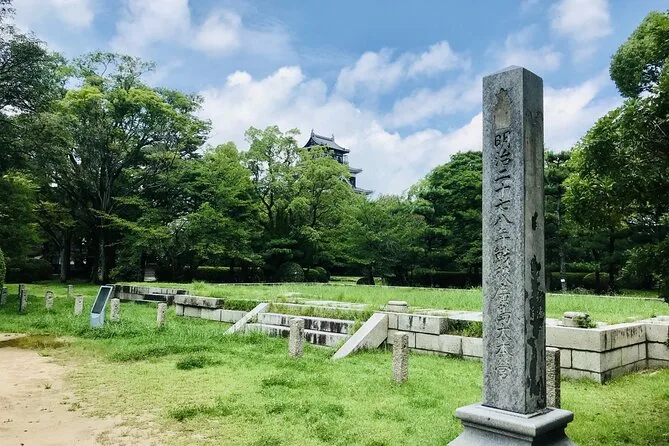
We walked over to Hiroshima Castle next, where the moat reflected those heavy summer clouds. The castle looks old, but Keiko pointed out what’s been rebuilt — she said even locals sometimes forget which stones are original. Inside, there’s armor and samurai swords (my nephew would lose his mind), but what stuck with me was a photo from right after the bombing: just emptiness and this stubborn bit of wall left standing. It made everything feel realer somehow.
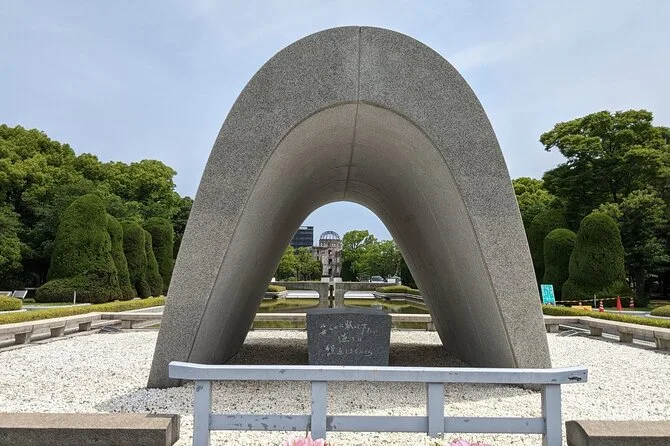
By the time we reached Peace Memorial Park, it had started to drizzle — just enough for the air to smell like wet grass and stone. The Atomic Bomb Dome is impossible to look away from; I stood there longer than I meant to, watching school kids lay paper cranes at the Children’s Peace Monument. One girl handed me a crane and said “peace” in English. I still have it tucked in my wallet. We ended by Orizuru Tower for a view over everything we’d just walked — city lights flickering against so much memory. Hard not to feel changed after that.
2h 30m

Step-by-step itinerary
Day 1 — Explore Hiroshima's history and peace sites
- Visit Hiroshima Gokoku Shrine
- Tour Hiroshima Castle grounds and museum
- See Hiroshima Green Arena
- Pass by Orizuru Tower
- Visit Atomic Bomb Dome
- Visit Children's Peace Monument
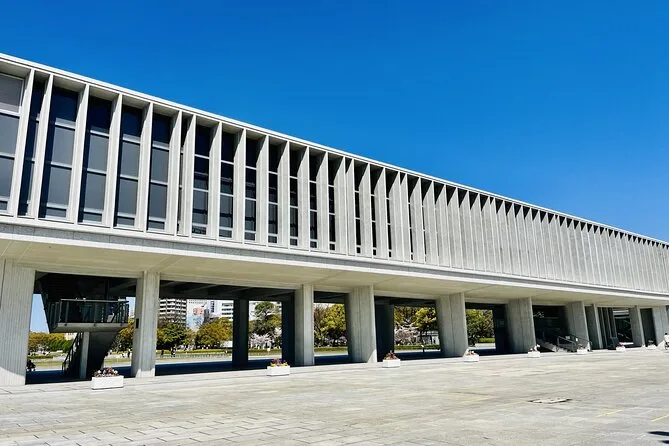
- Explore Hiroshima Peace Memorial Park

Top questions

How long does the Hiroshima walking tour last?
The tour covers several sites in central Hiroshima and typically lasts around half a day, depending on group pace.
Is this tour suitable for children or families?
Yes, families are welcome; children often participate by folding cranes at the Peace Park monuments.
Are entry fees included in this Hiroshima walking tour?
All fees and taxes are included in your booking price.
Is the route wheelchair accessible?
Yes, all areas and surfaces on this tour are wheelchair accessible.
Do I need to arrange transportation between sites?
No need; all locations are within walking distance in central Hiroshima.
Does the tour include lunch or food stops?
No lunch is included; however, you’ll pass by cafes near Peace Memorial Park if you want to stop after.
What language is the tour conducted in?
The tour is led by local guides who speak English fluently.
Can infants or small children join?
Yes, infants and small children can ride in prams or strollers during the walk.

What’s included
Your day includes all entry fees and taxes for Gokoku Shrine, Hiroshima Castle museum exhibits, and access throughout Peace Memorial Park — plus guidance from a knowledgeable local who helps bring each site’s story into focus as you walk together through central Hiroshima.
 Super deal
  Free booking, free cancellation.
  Don't lose your place.


 Do you need help planning your next activity?
  +507 6792-0894


