
Syracuse Neapolis: Private Walking Tour of Greek Theater & Ear of Dionysius
 Super deal


Summary
Walk ancient stones at Syracuse’s Neapolis park with a local guide
You’ll walk ancient paths through Syracuse’s Neapolis Archaeological Park with a local guide who brings history to life—touching Greek stones, hearing echoes in the Ear of Dionysius, wandering quarries where time feels thick. Expect real stories, small surprises, and that strange feeling when old places suddenly feel close.
 1h 30m

Step-by-step itinerary
Day 1 — Explore Neapolis archaeological park
- Visit Neapolis ancient monuments
- See Syracuse Greek Theater
- Discover Ear of Dionysius
- Walk through ancient stone quarries
- Learn about Roman gladiators and amphitheater

Top questions

How long does the Syracuse Neapolis private walking tour last?
The tour lasts about 1 hour and 30 minutes.
Is admission to Neapolis Archaeological Park included?
No, admission tickets are not included unless you choose the "tour + skip the line ticket" option.
What will I see on this tour?
You’ll visit Neapolis Archaeological Park including the Greek Theater, Ear of Dionysius, ancient quarries (latomie), and Roman amphitheater remains.
Is this walking tour wheelchair accessible?
Yes, transportation options and paths are wheelchair accessible throughout the park.
Are children or strollers allowed on this tour?
Yes, infants and small children can ride in a pram or stroller during the tour.
Will there be a local guide during the tour?
Yes, a professional local guide leads your private walking tour.
Is public transportation available nearby?
Yes, there are public transportation options close to Neapolis Archaeological Park.
Can service animals join this tour?
Yes, service animals are allowed on this walking tour.
Is comfortable footwear recommended for this tour?
Definitely—comfortable walking shoes are best as you’ll be on your feet throughout.

What’s included
Your experience includes a private guided walking tour led by a knowledgeable local expert through Syracuse’s Neapolis Archaeological Park; you’ll explore landmarks like the Greek Theater and Ear of Dionysius at your own pace—with flexibility for families or accessibility needs—but admission tickets aren’t part of standard booking unless you select them as an extra option.

The first thing I noticed stepping into Neapolis Archaeological Park was the smell—somewhere between old stone and warm pine needles. Our guide, Giulia, waved us over with that easy Sicilian smile and started right in, no fuss. She pointed out the grooves in the path where ancient carts once rattled past. I tried to imagine that noise, but all I could hear was birds and some distant construction. The park is bigger than it looks on Google Maps—my legs felt it by the end.
We stopped at the Greek Theater first. It’s massive, almost carved right out of the hillside. There were some modern stage bits set up (it’s performance season), so parts were hidden under scaffolding. Giulia shrugged and said locals are used to it—“the show must go on,” she joked. Even half-covered, you can feel how old this place is. The stone seats are worn smooth; I ran my hand along one and it was still cool from last night’s breeze.
I didn’t expect to be so fascinated by the “Ear of Dionysius.” It’s just a cave, really—a big one—but when Giulia whispered something inside, her voice echoed back like a secret bouncing around for centuries. Some school kids tried yelling opera notes; their laughter rolled out louder than they expected. After that we wandered through the old quarries—the latomie—and honestly, I lost track of time there. The air felt heavier somehow, like the rocks remembered everything.
By the time we reached what used to be the Roman amphitheater (now mostly ruins), my shoes were dusty and my brain was full of stories about gladiators and emperors who never made it home. Giulia kept tossing in little details—how prisoners carved marks into stone or how olive trees grow wherever they please here. I still think about that echo in the cave sometimes when things get too quiet back home.
Similar tours
 Syracuse, Ortigia & Noto: Walking Tour from Catania with Archaeological Park Entry
★★★★★★★★★★ 4.77 (302) From US$ 125.70
Syracuse, Ortigia & Noto: Walking Tour from Catania with Archaeological Park Entry
★★★★★★★★★★ 4.77 (302) From US$ 125.70
 Palermo: Private City Walk, Markets & Teatro Massimo Stories
★★★★★★★★★★ 4.84 (109) From US$ 128.05
Palermo: Private City Walk, Markets & Teatro Massimo Stories
★★★★★★★★★★ 4.84 (109) From US$ 128.05
 Catania Underground Tour: Roman Baths, Crypts & Hidden Rivers
★★★★★★★★★★ 4.85 (313) From US$ 93.98
Catania Underground Tour: Roman Baths, Crypts & Hidden Rivers
★★★★★★★★★★ 4.85 (313) From US$ 93.98
 Valley of the Temples: Sunset Tour with English Guide
★★★★★★★★★★ 4.74 (209) From US$ 38.77
Valley of the Temples: Sunset Tour with English Guide
★★★★★★★★★★ 4.74 (209) From US$ 38.77
 Palermo Walking Tour: Historic Center, Capo Market & Cathedral
★★★★★★★★★★ 4.98 (154) From US$ 160.35
Palermo Walking Tour: Historic Center, Capo Market & Cathedral
★★★★★★★★★★ 4.98 (154) From US$ 160.35
 Taormina to Savoca & Forza D’Agrò: Private Godfather Tour
★★★★★★★★★★ 4.93 (113) From US$ 229.08
Taormina to Savoca & Forza D’Agrò: Private Godfather Tour
★★★★★★★★★★ 4.93 (113) From US$ 229.08
 Messina to Etna & Taormina: Lava Walk, Corso Umberto, Lunch
★★★★★★★★★★ 4.74 (184) From US$ 140.97
Messina to Etna & Taormina: Lava Walk, Corso Umberto, Lunch
★★★★★★★★★★ 4.74 (184) From US$ 140.97
 Trapani Salt Pans: Guided Tour & Salt Museum with Tasting
★★★★★★★★★★ 4.81 (195) From US$ 31.71
Trapani Salt Pans: Guided Tour & Salt Museum with Tasting
★★★★★★★★★★ 4.81 (195) From US$ 31.71
 Messina, Savoca & Taormina: Godfather Movie Day Trip
★★★★★★★★★★ 4.76 (204) From US$ 117.48
Messina, Savoca & Taormina: Godfather Movie Day Trip
★★★★★★★★★★ 4.76 (204) From US$ 117.48
 Palermo: Walking Tour & Street Food at Capo Market & Monuments
★★★★★★★★★★ 4.95 (164) From US$ 35.24
Palermo: Walking Tour & Street Food at Capo Market & Monuments
★★★★★★★★★★ 4.95 (164) From US$ 35.24
 Erice & Segesta Day Trip from Palermo with Flexible Route
★★★★★★★★★★ 4.57 (143) From US$ 116.30
Erice & Segesta Day Trip from Palermo with Flexible Route
★★★★★★★★★★ 4.57 (143) From US$ 116.30
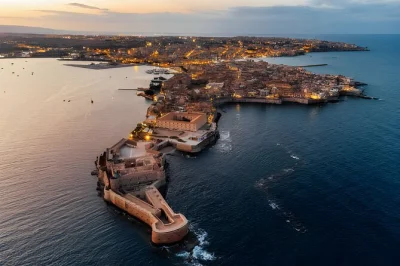 Syracuse & Noto: Private Tour with Local Guide & Lunch
★★★★★★★★★★ 4.62 (47) From US$ 264.31
Syracuse & Noto: Private Tour with Local Guide & Lunch
★★★★★★★★★★ 4.62 (47) From US$ 264.31
 Secure checkout on viator.com


 Do you need help planning your next activity?


