
Amalfi Coast & Pompeii: Private Day Tour with Sorrento Pickup
 Super deal


Summary
Pompeii ruins, Positano alleys, Ravello views & Neapolitan pizza on a winding day
You’ll ride along dramatic Amalfi Coast roads with a local driver from Sorrento, pause for photos above Positano’s pastel cliffs, walk ancient streets at Pompeii with an optional guide, sip wine at a family vineyard by Mt. Vesuvius or explore Herculaneum, then finish with real Neapolitan pizza in Naples. Each moment feels different—sometimes loud, sometimes quietly moving.
 6h–8h
6h–8h

Step-by-step itinerary
Day 1 — Explore Amalfi Coast and Pompeii
- Drive along the Amalfi Coast
- Photo stops at scenic viewpoints
- Visit Positano town
- Explore Amalfi town
- Enjoy views from Ravello hilltop
- Drive along Sorrento Coast
- Visit Pompeii archaeological site
- Optional visit to Herculaneum or local winery

Top questions

Is pickup from Sorrento included in this private Amalfi Coast tour?
Yes, pickup from Sorrento is included as part of your private day trip along the Amalfi Coast.
Can I customize the itinerary on this Amalfi Coast & Pompeii tour?
Yes—the itinerary is flexible and can be adjusted based on your preferences or mobility needs.
Are licensed guides available for Pompeii?
Yes, licensed guides can be arranged ahead of time for an extra cost if you want more detailed insight at Pompeii.
Is lunch included during this private tour?
No set lunch is included but you’ll have free time to eat—most travelers try pizza in Naples or opt for wine tasting near Mt. Vesuvius.
How long does it take to drive from Sorrento to Pompeii?
The drive from Sorrento to Pompeii takes about 45 minutes depending on traffic along the coast.
Is this tour suitable for wheelchairs or strollers?
Some areas are accessible but certain towns may have steep steps or narrow lanes; check ahead if mobility is a concern.

What’s included
Your day includes private air-conditioned transport with pickup from Sorrento or nearby towns, parking fees covered throughout each stop on the Amalfi Coast and at Pompeii, plus flexibility to choose between exploring Herculaneum or enjoying a local winery experience by Mt. Vesuvius before returning home.

I didn’t expect the Amalfi Coast to smell like lemons before we even saw the sea. Our driver, Antonio, picked us up in Sorrento just as the sun started warming the stone walls. He laughed at my jetlagged Italian and pointed out tiny villages clinging to cliffs—somehow both sleepy and alive. The road twisted so much I lost count (and maybe my sense of direction), but every curve brought a new view that made us all go quiet for a second. We stopped for photos where the air tasted salty and sweet, and honestly, I still think about that first glimpse of Positano tumbling down towards the water.
Popping into Pompeii felt almost unreal after all that color. The stones were warm underfoot and there was this faint smell of dust and pine. You can get a licensed guide if you want all the details (we did), or just wander—either way, it’s wild seeing ancient frescoes right there in front of you. Our guide told stories about daily Roman life that made it weirdly easy to imagine people living here before everything froze in time. I tried to picture what it sounded like back then—now it’s mostly footsteps and distant voices echoing off old walls.
After Pompeii, Antonio gave us a choice: visit Herculaneum or try wine at a family-run place near Mt. Vesuvius. We went for wine (no regrets). The vineyard was simple but the owner poured us something sharp and earthy—tasted like sunshine mixed with volcanic rock, if that makes sense? Later in Naples, we squeezed into a noisy pizzeria where nobody cared how you pronounced “Margherita.” The crust was chewy at the edges and soft in the middle; I probably ate too fast but everyone else did too.
By Ravello, late afternoon light made everything gold. Locals leaned over balconies talking with their hands while church bells echoed somewhere above us. I remember thinking how different each stop felt—Positano’s colors, Pompeii’s silence, Naples’ chaos—and how our day kept shifting gears without ever feeling rushed or forced. There’s something about seeing all these places in one go that makes them blur together in your memory—in a good way.
Similar tours
 Naples to Pompeii, Sorrento & Positano View Day Trip
★★★★★★★★★★ 4.85 (109) From US$ 89.28
Naples to Pompeii, Sorrento & Positano View Day Trip
★★★★★★★★★★ 4.85 (109) From US$ 89.28
 Pompeii from Naples: Private Tour with Skip-the-Line & Pickup
★★★★★★★★★★ 4.87 (127) From US$ 468.99
Pompeii from Naples: Private Tour with Skip-the-Line & Pickup
★★★★★★★★★★ 4.87 (127) From US$ 468.99
 Naples: Pompeii & Mt Vesuvius Tour with Lunch & Wine
★★★★★★★★★★ 4.84 (342) From US$ 149.78
Naples: Pompeii & Mt Vesuvius Tour with Lunch & Wine
★★★★★★★★★★ 4.84 (342) From US$ 149.78
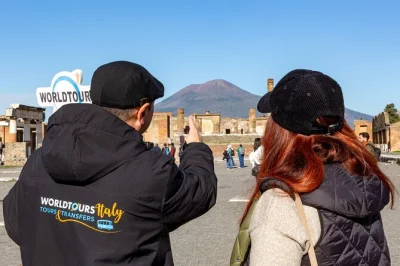 Naples to Amalfi Coast & Pompeii Day Trip with Pickup
★★★★★★★★★★ 4.70 (2488) From US$ 88.11
Naples to Amalfi Coast & Pompeii Day Trip with Pickup
★★★★★★★★★★ 4.70 (2488) From US$ 88.11
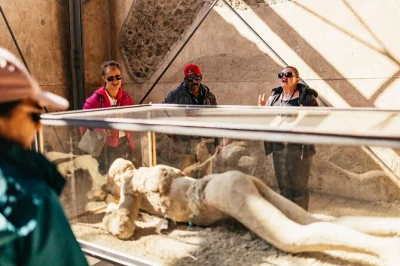 Naples: Pompeii & Herculaneum Small Group Day Trip
★★★★★★★★★★ 4.67 (206) From US$ 139.80
Naples: Pompeii & Herculaneum Small Group Day Trip
★★★★★★★★★★ 4.67 (206) From US$ 139.80
 Naples: Pompeii & Mt Vesuvius Small Group Day Trip with Lunch
★★★★★★★★★★ 4.71 (3250) From US$ 112.78
Naples: Pompeii & Mt Vesuvius Small Group Day Trip with Lunch
★★★★★★★★★★ 4.71 (3250) From US$ 112.78
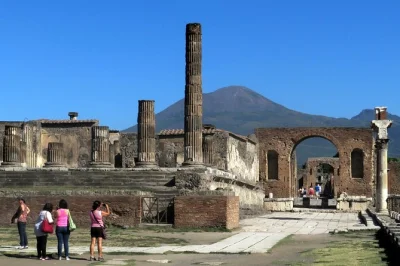 Naples & Pompeii: Small Group Skip-the-Line Tour with Pickup
★★★★★★★★★★ 4.74 (1549) From US$ 52.42
Naples & Pompeii: Small Group Skip-the-Line Tour with Pickup
★★★★★★★★★★ 4.74 (1549) From US$ 52.42
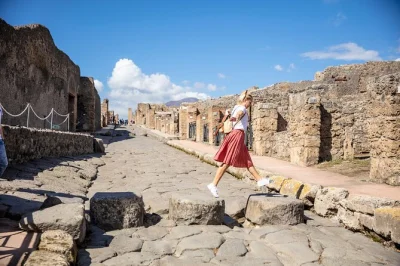 Capri, Sorrento & Pompeii: Private Tour with Local Guide
★★★★★★★★★★ 5.00 (12) From US$ 845.84
Capri, Sorrento & Pompeii: Private Tour with Local Guide
★★★★★★★★★★ 5.00 (12) From US$ 845.84
 Pompeii & Naples Day Trip from Rome by Train with Pizza
★★★★★★★★★★ 4.77 (243) From US$ 269
Pompeii & Naples Day Trip from Rome by Train with Pizza
★★★★★★★★★★ 4.77 (243) From US$ 269
 Naples: Pompeii Skip-the-Line & Mt. Vesuvius Day Trip
★★★★★★★★★★ 4.68 (756) From US$ 135.10
Naples: Pompeii Skip-the-Line & Mt. Vesuvius Day Trip
★★★★★★★★★★ 4.68 (756) From US$ 135.10
 Rome to Pompeii Day Trip by High-Speed Train & Winery Lunch
★★★★★★★★★★ 4.80 (1566) From US$ 239
Rome to Pompeii Day Trip by High-Speed Train & Winery Lunch
★★★★★★★★★★ 4.80 (1566) From US$ 239
 Pompeii & Herculaneum Day Trip by Train with Pizza Lunch
★★★★★★★★★★ 4.87 (117) From US$ 279
Pompeii & Herculaneum Day Trip by Train with Pizza Lunch
★★★★★★★★★★ 4.87 (117) From US$ 279


 Do you need help planning your next activity?


