

 +507 6792-0894


Agra Poetry Walk: Explore Ghalib’s Birthplace & Urdu Heritage


Summary
Old City Poetry Tour: Urdu Calligraphy & Local Poets in Agra
If you’re curious about Agra beyond its monuments, this poetry walk is for you. You’ll visit hidden spots tied to legendary poets, try your hand at Urdu calligraphy, hear live performances in centuries-old spaces, and meet locals who keep Agra’s poetic tradition alive.

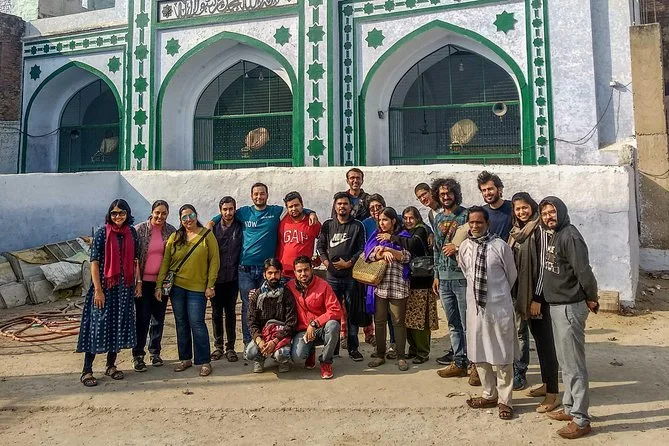
The first thing that hit me was the early morning buzz outside Jama Masjid—chai stalls already busy, the air thick with cardamom and a hint of traffic. Our guide, Imran, handed out slim booklets with verses from Nazir Akbarabadi and Ghalib. We set off down narrow lanes, pausing at Mirza Ghalib’s birthplace. It’s tucked behind a faded blue door; you’d miss it if you didn’t know to look for the old brass nameplate. Imran shared stories about Ghalib’s childhood and how Urdu poetry really took off during the Mughal era. I could almost picture the poet scribbling lines by candlelight.
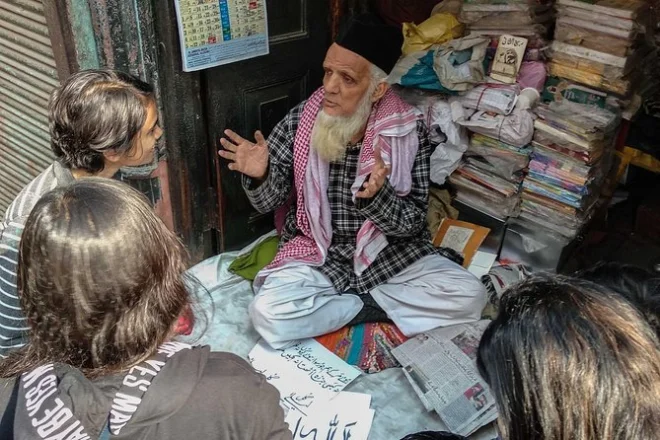
A few turns later, we ducked into a tiny calligraphy workshop—just three tables and the smell of ink everywhere. The calligrapher showed us how each Urdu letter flows into the next, making words look almost like art. He let us try our hand at writing our names; mine came out wobbly but I kept the paper anyway. Walking along what used to be part of the silk route, we read aloud some verses from Nazir Akbarabadi right there on the street as vendors rolled up their shutters. It felt like his words belonged to these cobblestones.
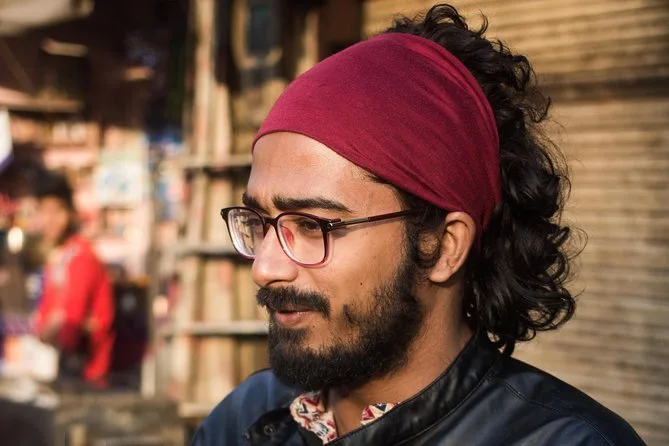
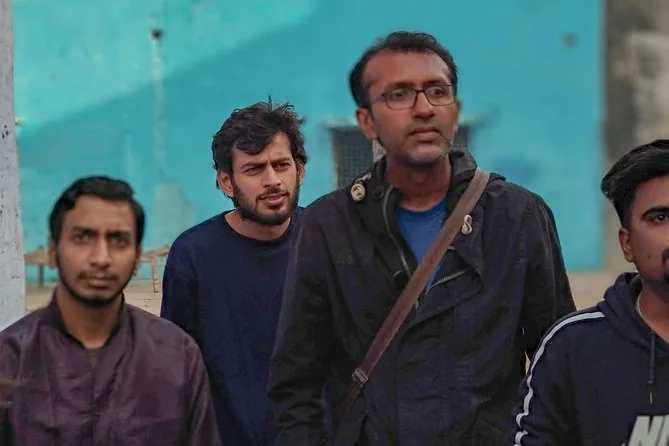
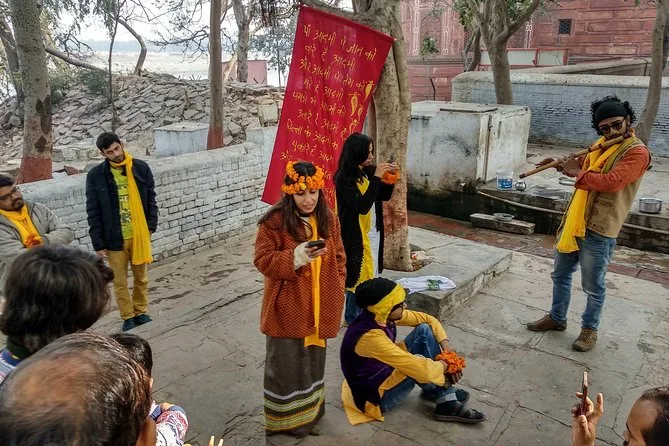
We stopped at Khankhana Katra where Imran recited Rahim’s Hindi dohas under an old archway—a spot where Hindi and Urdu seem to blend naturally. Later, inside a 17th-century temple, a flute player filled the space with music while we listened to Meer Taqi Mir’s poetry echo off stone walls. The afternoon sun made everything glow gold as we wandered through an old neighborhood and met two local poets—one recited her latest poem about city life; another spoke about breaking stereotypes through verse. Before heading back, we visited Maikash Akbarabadi’s family mausoleum and ended at a 15th-century mosque where more poets gathered to share their work. By then, my notebook was full of scribbles and my head buzzing with new words.
 2h–3h
2h–3h

Step-by-step itinerary
Day 1 — Poetry Walk in Agra
- Start walk from Jama Masjid
- Visit Mirza Ghalib's Birthplace and learn about Urdu poetry
- Calligraphy workshop on Urdu script
- Walk 16th-century shopping street; read Nazir Akbarabadi's verses
- Visit Khankhana Katra; read Abdur Rahim Khankhana's Hindi Dohas
- Live flute performance in 17th-century temple; discuss Meer Taqi Meet's poetry
- Explore 16th-century neighborhood; meet practicing poets
- Visit 15th-century mosque; listen to poets
- Visit family mausoleum of poet Maikash Akbarabadi

Top questions

Is this tour suitable for people who don’t speak Hindi or Urdu?
Absolutely! The guide explains everything in English too and provides translations for poems so everyone can follow along.
How much walking is involved? Is it very strenuous?
The walk covers several stops in the old city with some uneven paths but goes at a relaxed pace—just wear comfy shoes.
Can I join if I have no background in poetry?
You don’t need any prior knowledge—the tour is designed for anyone interested in culture or history, not just poetry fans.

What’s included
You’ll get a handout with curated photographs and selected verses from Agra’s poets to take home. All entry fees are covered, plus you’ll experience a live flute performance and hands-on calligraphy session during the walk.
 Super deal
  Free booking, free cancellation.
  Don't lose your place.


 Do you need help planning your next activity?
  +507 6792-0894


