

 +507 6792-0894


Munich: WWII & Third Reich Walking Tour with History Stops
 2h 45m
 4.53
(383 reviews)
4.53
(383 reviews)

Summary
Walk Munich’s WWII past from Hofbräuhaus to Königsplatz with real stories
You’ll walk Munich’s streets with a local guide who brings WWII history alive through real stories at places like Königsplatz and Hofbräuhaus. Hear about resistance movements right where they began and see photos from the era as you stand in those same spots. Expect honest conversation and moments that stick with you long after.

First thing I noticed was how quiet the streets felt near Königsplatz, even with a few trams rattling by. Our guide, Anna, had this way of pausing before each stop — like she wanted us to really see what was left behind. We stood in front of those big stone buildings and she pointed out where Nazi rallies once filled the square. It’s strange, thinking about all that noise and fury in a place that now smells faintly of wet leaves and distant coffee.
I’ll admit, I didn’t expect to feel much at the Hofbräuhaus — it’s just a beer hall, right? But Anna told us about the first mass meeting there, how it started with just a handful of angry men. There was something heavy in the air, or maybe that was just me imagining it. Someone in our group asked about daily life back then and Anna didn’t sugarcoat anything. She even showed us an old photo tucked into her notebook — black-and-white faces staring back from almost the same spot where we stood.
We wound through narrow streets to Feldherrnhalle, where the failed coup happened. The sky was grey but not cold; I remember a kid on a scooter weaving around us while Anna talked about resistance groups like the White Rose. She said their leaflets were printed just a few blocks away. I tried to picture being brave enough for that — honestly, can’t say I would’ve been.
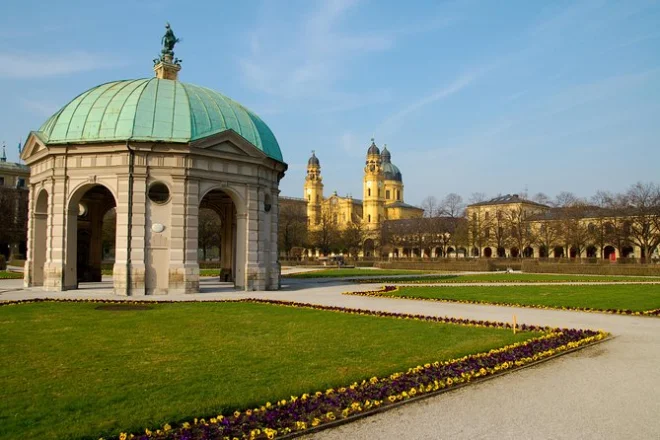
The tour ended in Hofgarten, under some lime trees where everything smelled green and damp after last night’s rain. There wasn’t any big speech or tidy ending; Anna just let us linger for a minute. I still think about those students from the White Rose movement sometimes when I walk past old walls anywhere — you know?
2h 45m

Step-by-step itinerary
Day 1 — Explore Munich's Third Reich history
- Learn post-WWI Munich context
- Visit Hofbräuhaus mass meeting site
- See Feldherrnhalle failed coup site
- Stop at Königsplatz mass rally site
- Discuss White Rose resistance in Hofgarten

Top questions

How long is the Third Reich & WWII walking tour in Munich?
The tour lasts approximately 2.5 hours.
What sites are included on this Munich WWII walking tour?
You’ll visit places like Königsplatz, Hofbräuhaus, Feldherrnhalle, and Hofgarten.
Is this walking tour wheelchair accessible?
Yes, all areas and surfaces on this tour are wheelchair accessible.
Does the tour include stories about resistance movements?
Yes, your guide will talk about groups like the White Rose resistance movement.
Are strollers or prams allowed on this Munich history tour?
Yes, infants and small children can ride in a pram or stroller during the tour.
Will there be a professional guide leading the tour?
A professional guide leads every Third Reich & WWII walking tour in Munich.
Is public transportation nearby for this Munich walking tour?
Yes, public transportation options are available close to the starting point.

What’s included
Your day includes a 2.5-hour walk through central Munich led by a professional guide who shares stories at each historic site; all routes are wheelchair accessible and you’re welcome to bring strollers or service animals along for an easy pace through history.
 Super deal
  Free booking, free cancellation.
  Don't lose your place.


 Do you need help planning your next activity?
  +507 6792-0894


