
Paris Montmartre Walking Tour: Sacré-Cœur & Moulin Rouge
 Super deal


Summary
Montmartre’s artists, Sacré-Cœur views & Parisian café life
You’ll wander Montmartre’s famous hills with a local guide, passing landmarks like Moulin Rouge and Sacré-Cœur Basilica. Along the way you’ll find hidden art corners, meet painters on Place du Tertre, and hear stories behind spots like the Wall of Love—all at an easy pace that lets you soak in real Parisian life.
 2h–2h 20m

Step-by-step itinerary
Day 1 — Explore Montmartre and Sacré-Cœur Basilica
- Meet guide at Place des Abbesses
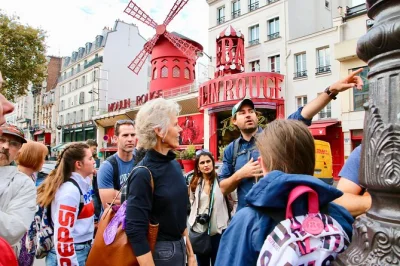
- See Moulin Rouge and take photos
- Visit café from film "Amelie"
- Discover the Wall of Love history
- See sweet spots, church, and metro gate
- Learn about historic Moulin de la Galette
- Pass Dalida's old house and hear story
- View last vineyard of Paris
- Walk oldest and famous Montmartre street
- Learn why painters lived here
- Visit small cafes and meet local painters
- Visit Dalí Gallery if open
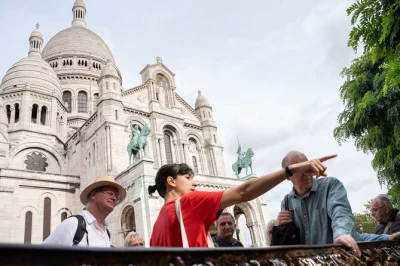
- Explore Sacré-Cœur Basilica and history

Top questions

How long is the Montmartre walking tour?
The tour covers several key sights in Montmartre on foot; duration depends on group pace but generally lasts around 2–3 hours.
Does this tour include entry to Sacré-Cœur?
The tour brings you to Sacré-Cœur Basilica with information from your guide; entry is free and open to visitors during regular hours.
Where does the tour start?
The meeting point is Place des Abbesses in Montmartre, near the distinctive Art Nouveau metro entrance.
Is public transportation nearby?
Yes, public transportation options are available close to Place des Abbesses where the tour begins.
Are there many stairs or steep streets on this tour?
Yes, Montmartre has steep hills and cobblestone streets; some walking fitness is recommended.
Is lunch or food included?
No meals are included; you’ll pass cafés and bakeries along the way if you want to buy snacks.
Will we see local artists at work?
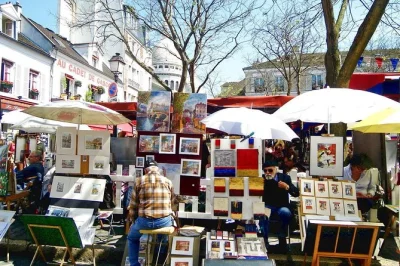
You’ll visit Place du Tertre where many local painters display their art and often work live in front of visitors.
What language is the tour conducted in?
The standard tour is offered in English with a knowledgeable local guide.

What’s included
Your experience includes an expert local guide leading you through Montmartre’s iconic sights—from Moulin Rouge to Sacré-Cœur—with stories shared along each stop. You’ll have opportunities for photos and time to linger at places like Place du Tertre and Dalí Paris before finishing near Sacré-Cœur Basilica. Public transport is nearby for your return journey.

I didn’t expect the first thing I’d notice in Montmartre to be the smell—fresh bread drifting out from some tiny bakery near Place des Abbesses. Our guide, Camille, was already waiting by that wild Art Nouveau metro sign (I never get tired of those), waving us over like old friends. We set off up those cobbled streets, which honestly felt steeper than I remembered from movies. Camille pointed out the old windmill—Moulin de la Galette—and told us about Renoir painting dancers right there. I could almost hear music echoing between the buildings if I let myself.
The Wall of Love surprised me most. It’s just tucked away behind a playground, covered in “I love you” in so many languages you lose count. Camille made us guess a few before explaining the story behind it—she laughed when I tried my high school French (badly). We passed Dalida’s old house and paused at a café from “Amélie.” There was this older man sketching at a table outside; he barely looked up as we shuffled past but gave us a little nod anyway. That felt more Parisian than any postcard.
By the time we reached Place du Tertre, the air smelled like paint and coffee and something sweet—maybe crêpes? Local painters were everywhere, chatting or quietly working while tourists watched. Camille introduced us to one who’d been there for decades; his hands were stained with blue and ochre. The walk up to Sacré-Cœur was slow (my legs complained), but when we finally stood at the top, Paris just stretched out below us in this pale afternoon light. It wasn’t quiet—someone played accordion nearby—but it felt peaceful all the same. I still think about that view sometimes.
Similar tours
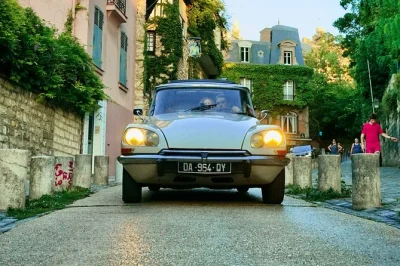 Paris: Private Vintage Car Tour & Top Landmarks with Local Guide
★★★★★★★★★★ 4.94 (163) From US$ 316.13
Paris: Private Vintage Car Tour & Top Landmarks with Local Guide
★★★★★★★★★★ 4.94 (163) From US$ 316.13
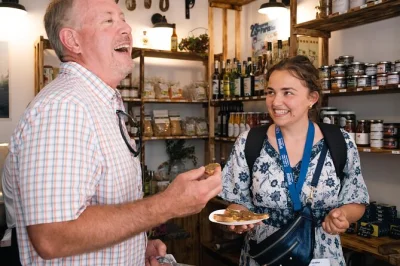 Paris Montmartre: Food & Wine Walking Tour with Tastings
★★★★★★★★★★ 4.79 (2717) From US$ 140.97
Paris Montmartre: Food & Wine Walking Tour with Tastings
★★★★★★★★★★ 4.79 (2717) From US$ 140.97
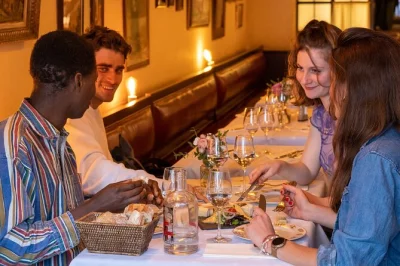 Paris Montmartre Food Tour: Full French Meal & Local Bistros
★★★★★★★★★★ 4.93 (1429) From US$ 104.56
Paris Montmartre Food Tour: Full French Meal & Local Bistros
★★★★★★★★★★ 4.93 (1429) From US$ 104.56
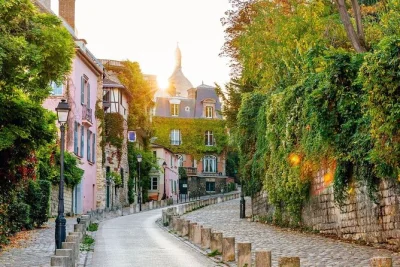 Paris Montmartre: Moulin Rouge, Sacré-Cœur & Artists Walk
★★★★★★★★★★ 4.85 (162) From US$ 57.56
Paris Montmartre: Moulin Rouge, Sacré-Cœur & Artists Walk
★★★★★★★★★★ 4.85 (162) From US$ 57.56
 Paris Montmartre: Walking Tour with Sacré Coeur & Moulin Rouge
★★★★★★★★★★ 4.98 (375) From US$ 61.02
Paris Montmartre: Walking Tour with Sacré Coeur & Moulin Rouge
★★★★★★★★★★ 4.98 (375) From US$ 61.02
 Paris Montmartre Walking Tour & Sacré-Cœur Entry Max 12
★★★★★★★★★★ 4.98 (196) From US$ 61.02
Paris Montmartre Walking Tour & Sacré-Cœur Entry Max 12
★★★★★★★★★★ 4.98 (196) From US$ 61.02
 Paris: Montmartre to Arc de Triomphe Walk with Tickets
★★★★★★★★★★ 4.79 (28) From US$ 104.01
Paris: Montmartre to Arc de Triomphe Walk with Tickets
★★★★★★★★★★ 4.79 (28) From US$ 104.01
 Paris Walking Tour: Montmartre, Eiffel Tower & Latin Quarter
★★★★★★★★★★ 4.85 (3162) From US$ 75.27
Paris Walking Tour: Montmartre, Eiffel Tower & Latin Quarter
★★★★★★★★★★ 4.85 (3162) From US$ 75.27
 Paris Montmartre: Secret Streets Walk & Croissant Tasting
★★★★★★★★★★ 4.85 (957) From US$ 41.12
Paris Montmartre: Secret Streets Walk & Croissant Tasting
★★★★★★★★★★ 4.85 (957) From US$ 41.12
 Paris Montmartre: Romantic Love Story Game & Walking Tour
★★★★★★★★★★ 4.58 (107) From US$ 7.39
Paris Montmartre: Romantic Love Story Game & Walking Tour
★★★★★★★★★★ 4.58 (107) From US$ 7.39
 Paris: Musée d'Orsay & Montmartre Small Group Art Tour
★★★★★★★★★★ 4.99 (99) From US$ 280.19
Paris: Musée d'Orsay & Montmartre Small Group Art Tour
★★★★★★★★★★ 4.99 (99) From US$ 280.19
 Paris Landmarks: Vintage Sidecar Tour with Local Guide & Pickup
★★★★★★★★★★ 4.93 (29) From US$ 327.76
Paris Landmarks: Vintage Sidecar Tour with Local Guide & Pickup
★★★★★★★★★★ 4.93 (29) From US$ 327.76


 Do you need help planning your next activity?


