
Normandy D-Day Beaches: Utah, Omaha & Pointe du Hoc Day Trip
 Super deal


Summary
Omaha and Utah Beach day trip from Bayeux with real stories
You’ll walk Normandy’s D-Day beaches with a local guide who brings history to life at Omaha and Utah, see Pointe du Hoc’s battered cliffs, and pause in Sainte-Mère-Église village for lunch. Standing among the graves near Bayeux will stay with you long after you leave.
 8h
8h

Step-by-step itinerary
Day 1 — Visit key Normandy D-Day sites
- Meet guide at Place Québec Bayeux
- Visit Sainte-Mère-Eglise village
- Explore Utah Beach landing area
- Walk Pointe du Hoc cliffs
- Lunch break near Pointe du Hoc
- Visit Omaha Landing Beaches
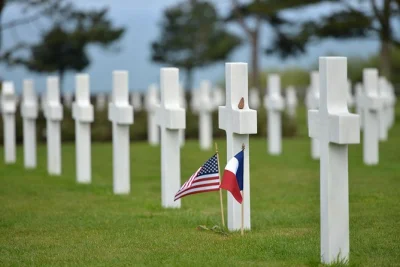
- Tour Normandy American Cemetery
- Return to Place Québec Bayeux

Top questions

How long is the Normandy D-Day beaches tour from Bayeux?
The full day tour lasts approximately 8-9 hours including transport and stops.
Is lunch included on this Normandy battlefield tour?
No, lunch is not included but there is free time for lunch near Pointe du Hoc.
Which D-Day sites are visited during this day trip?
The tour visits Omaha Beach, Utah Beach, Pointe du Hoc (if open), Sainte-Mère-Église village, and the Normandy American Cemetery near Bayeux.
What language does the guide speak on this tour?
The driver/guide speaks English throughout the tour.
How many people are on each Normandy D-Day group tour?
The group size is limited to a maximum of 19 participants per vehicle.
Where does the tour depart from in Bayeux?
The meeting point is Place Québec in central Bayeux for both pickup and drop-off.
Are infant seats available for this Normandy day trip?
Yes, specialized infant seats are available upon request during booking.
What happens if Pointe du Hoc is closed during my visit?
If Pointe du Hoc is closed due to construction works (2026–2027), another historic site such as Sainte-Marie-du-Mont or Carentan will be substituted.

What’s included
Your day includes round-trip transport from central Bayeux in an air-conditioned vehicle with a professional English-speaking guide leading you through Omaha Beach, Utah Beach, Pointe du Hoc (or alternate site if closed), Sainte-Mère-Église village for free time at lunch, plus time at the Normandy American Cemetery before returning to Bayeux in the evening.

Hands in his jacket pockets, our guide Jean-Luc squinted out toward the water at Omaha Beach and asked if we could imagine what it sounded like here on June 6th. I couldn’t, not really — the wind was cold and sharp that morning, but all I could hear were distant gulls and our shoes crunching on damp sand. He pointed out where the first American troops landed, tracing invisible lines with his finger. It’s strange how quiet it is now. I caught myself staring too long at the horizon.
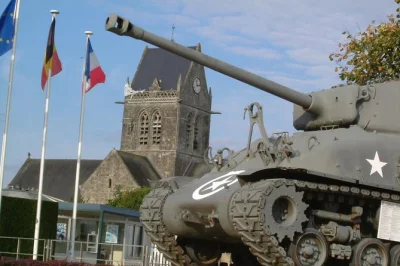
We’d started in Bayeux, just a handful of us piling into a van (air-conditioned, thankfully — Normandy weather isn’t shy). Jean-Luc told stories as we drove past hedgerows and sleepy villages. At Pointe du Hoc, he showed us craters still pockmarking the ground. I ran my hand along the rough concrete of a German bunker — colder than I expected. Lunch was simple: baguette and cheese near Sainte-Mère-Église, where a mannequin paratrooper still hangs from the church steeple (it’s odd but somehow fitting). The village felt lived-in, not staged for tourists.
Utah Beach looked almost ordinary until Jean-Luc shared photos of what it looked like in 1944. A couple of locals waved as they cycled past us; one stopped to chat about his grandfather who remembered the landings. There’s something about hearing it from someone whose family lived through it — made everything hit harder than any museum display ever could. The American Cemetery near Bayeux was our last stop; white crosses stretching in impossible rows. I tried to read every name but gave up halfway through. Still think about that silence under the trees.
Similar tours
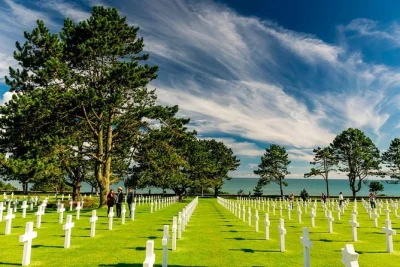 Normandy D-Day Beaches: Full Day Tour from Bayeux
★★★★★★★★★★ 4.92 (2443) From US$ 164.47
Normandy D-Day Beaches: Full Day Tour from Bayeux
★★★★★★★★★★ 4.92 (2443) From US$ 164.47
 Normandy D-Day Tour from Bayeux: American Sectors & Airborne Museum
★★★★★★★★★★ 4.96 (1684) From US$ 174.46
Normandy D-Day Tour from Bayeux: American Sectors & Airborne Museum
★★★★★★★★★★ 4.96 (1684) From US$ 174.46
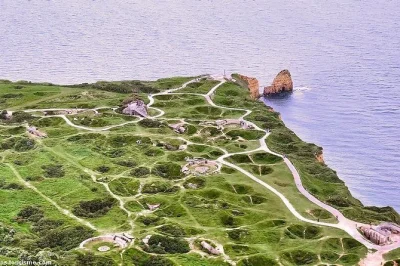 Normandy D-Day Beaches: Private Tour from Bayeux with Pickup
★★★★★★★★★★ 4.96 (186) From US$ 409.67
Normandy D-Day Beaches: Private Tour from Bayeux with Pickup
★★★★★★★★★★ 4.96 (186) From US$ 409.67
 Normandy D-Day Tour: Band of Brothers Sites & Omaha Beach
★★★★★★★★★★ 4.95 (97) From US$ 164.47
Normandy D-Day Tour: Band of Brothers Sites & Omaha Beach
★★★★★★★★★★ 4.95 (97) From US$ 164.47
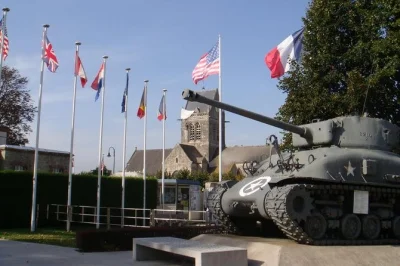 Normandy D-Day Beaches: Private Tour from Bayeux & Omaha
★★★★★★★★★★ 4.99 (616) From US$ 403.83
Normandy D-Day Beaches: Private Tour from Bayeux & Omaha
★★★★★★★★★★ 4.99 (616) From US$ 403.83
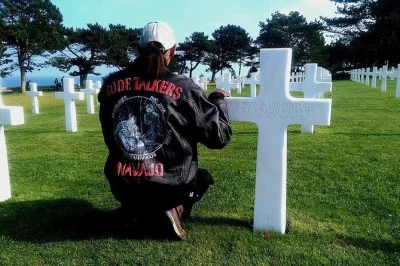 Normandy D-Day Private Tour: Omaha Beach & Pointe du Hoc
★★★★★★★★★★ 4.99 (138) From US$ 938.65
Normandy D-Day Private Tour: Omaha Beach & Pointe du Hoc
★★★★★★★★★★ 4.99 (138) From US$ 938.65
 Normandy D-Day Tour from Bayeux: Omaha Beach & Pointe du Hoc
★★★★★★★★★★ 4.93 (255) From US$ 174.46
Normandy D-Day Tour from Bayeux: Omaha Beach & Pointe du Hoc
★★★★★★★★★★ 4.93 (255) From US$ 174.46
 Normandy D-Day Beaches: Full Day Small Group Tour from Bayeux
★★★★★★★★★★ 4.96 (131) From US$ 164.47
Normandy D-Day Beaches: Full Day Small Group Tour from Bayeux
★★★★★★★★★★ 4.96 (131) From US$ 164.47
 Normandy D-Day Tour: Omaha, Utah Beaches & Pointe du Hoc
★★★★★★★★★★ 5.00 (281) From US$ 640.26
Normandy D-Day Tour: Omaha, Utah Beaches & Pointe du Hoc
★★★★★★★★★★ 5.00 (281) From US$ 640.26
 Normandy: US D-Day Beaches & Battlefields Day Tour from Bayeux
★★★★★★★★★★ 4.90 (306) From US$ 156.65
Normandy: US D-Day Beaches & Battlefields Day Tour from Bayeux
★★★★★★★★★★ 4.90 (306) From US$ 156.65
 Normandy D-Day Private Tour from Paris: Omaha Beach & Cemetery
★★★★★★★★★★ 4.82 (265) From US$ 939.83
Normandy D-Day Private Tour from Paris: Omaha Beach & Cemetery
★★★★★★★★★★ 4.82 (265) From US$ 939.83
 Normandy D-Day Sites: Small Group Tour from Bayeux
★★★★★★★★★★ 4.80 (890) From US$ 156.65
Normandy D-Day Sites: Small Group Tour from Bayeux
★★★★★★★★★★ 4.80 (890) From US$ 156.65


 Do you need help planning your next activity?


