
Cairo: Pyramids, Sphinx, Grand Museum & Bazaar VIP Day Tour


Summary
Walk ancient sands see Tutankhamun’s gold sip tea in Cairo’s bazaar
You’ll walk where pharaohs once stood at Giza’s pyramids, meet Egypt’s treasures up close at the Grand Egyptian Museum, taste real koshari over lunch, and lose yourself among lanterns and spices in Khan el-Khalili bazaar—all with a local guide who brings Cairo’s stories to life.
 6h–9h
6h–9h

Step-by-step itinerary
Day 1 — Explore Giza Pyramids and Cairo highlights
- Visit Great Pyramid of Khufu
- See Pyramid of Khafre
- Explore Pyramid of Menkaure
- Enjoy Panorama View and camel ride
- Visit Great Sphinx of Giza
- Tour Grand Egyptian Museum
- Visit Papyrus Institute and Perfume Factory
- Lunch break
- Shop at Khan El Khalili Bazaar
- Return to hotel

Top questions

How long does this Cairo VIP tour last?
The full-day private tour typically lasts around 8 hours including all main sites and transfers.
Is hotel pickup included in the price?
Yes, pickup from any hotel in Cairo is included along with drop-off after your tour.
Are entry tickets for the pyramids and museum included?
If you select that pricing option during booking, entry tickets for Giza Pyramids and Grand Egyptian Museum are included.
Is lunch provided on this day trip?
A traditional Egyptian lunch is included if you choose that option when booking your VIP tour.
Can I take this tour if I use a wheelchair or stroller?
Yes—the tour is wheelchair accessible and strollers/infant seats can be arranged upon request.
What languages are available for guides?
The standard guide speaks English; other languages can be arranged for an extra fee per person.
Do we get time to shop at Khan el-Khalili bazaar?
Yes—you’ll have time to browse shops for crafts, jewelry or spices after lunch before heading back.
Is there a camel ride included?
A camel ride on the Giza Plateau is available if you select that option during booking.

What’s included
Your day includes hotel pickup anywhere in Cairo by private air-conditioned vehicle, all main entry fees if chosen (for Giza Pyramids area, Grand Egyptian Museum & Khan el-Khalili), an expert local guide throughout your journey (with other language options available), skip-the-line access where possible, an authentic Egyptian lunch if selected—and even a camel ride if you’re up for it—before returning comfortably to your hotel at day’s end.

We were already halfway across Cairo when our guide, Hossam, started telling us how his grandfather used to sneak into the pyramids as a kid. I was still rubbing sleep from my eyes when we pulled up at Giza—those pyramids really do just rise out of the city haze, bigger than I’d pictured. The air was dry and smelled faintly like dust and diesel. Standing in front of Khufu’s pyramid, I tried to imagine what it looked like when it was all smooth and white. Hossam pointed out a block with some ancient graffiti—he laughed and said even 4,000 years ago people wanted to leave their mark. We did the camel ride (I almost slid right off at first; those saddles are not made for nervous tourists), and I swear the camel kept glancing back at me like he knew I had no idea what I was doing.
The Sphinx is smaller than you expect but somehow more mysterious. There were school kids on a field trip nearby, shouting questions at Hossam about secret tunnels. He just grinned and shrugged—“Some things are meant to stay mysteries.” The Grand Egyptian Museum is a whole other world: cool air, polished stone floors, and so many artifacts it’s hard to know where to look first. Tutankhamun’s mask is there now—so shiny you can see your own face reflected back. For some reason, seeing his sandals hit me harder than the gold stuff. Maybe because they looked worn, like someone actually used them.
Lunch was at this place Hossam picked—not touristy at all—and we tried koshari (I still don’t know exactly what’s in it but it was spicy and comforting). After that we headed into Khan el-Khalili bazaar. It’s chaos in the best way: shopkeepers calling out prices in three languages, spices piled high in open sacks, a guy selling little glass bottles of perfume who insisted I try one called “Queen Cleopatra” (it lingered on my wrist all afternoon). We sat for mint tea while Hossam told stories about the old city walls—I only caught half of it because I was distracted by a boy weaving through tables with a tray stacked impossibly high with bread.
By late afternoon my feet were sore but I didn’t want to leave yet. Cairo feels both ancient and alive—you can hear prayers echoing from mosques while mopeds zip past you loaded with bread or chickens or sometimes both. On the drive back to our hotel I kept thinking about those sandals in the museum, how someone walked these same streets thousands of years ago. Makes you feel small in a good way.
Similar tours
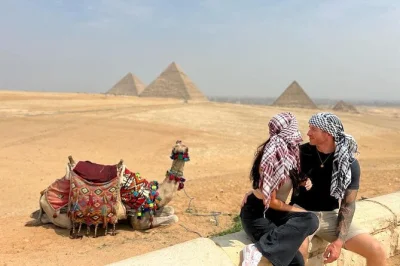 Giza Pyramids & Sphinx: Private Tour, Camel Ride & Pyramid Entry
★★★★★★★★★★ 4.84 (490) From US$ 10
Giza Pyramids & Sphinx: Private Tour, Camel Ride & Pyramid Entry
★★★★★★★★★★ 4.84 (490) From US$ 10
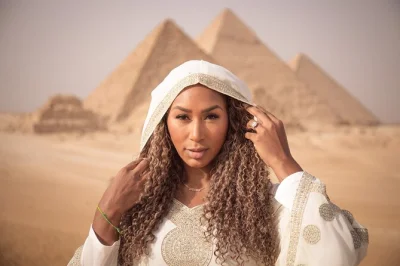 Cairo & Giza: Pyramids, Egyptian Museum & Khan el-Khalili Tour
★★★★★★★★★★ 4.74 (185) From US$ 15
Cairo & Giza: Pyramids, Egyptian Museum & Khan el-Khalili Tour
★★★★★★★★★★ 4.74 (185) From US$ 15
 Giza, Saqqara & Dahshur: Full Day Pyramids Tour with Pickup
★★★★★★★★★★ 4.95 (112) From US$ 60
Giza, Saqqara & Dahshur: Full Day Pyramids Tour with Pickup
★★★★★★★★★★ 4.95 (112) From US$ 60
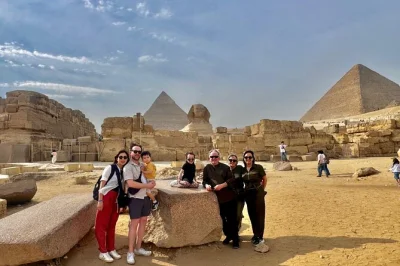 Giza Pyramids & Sphinx: Private Half-Day Tour with Pickup
★★★★★★★★★★ 4.89 (2418) From US$ 40
Giza Pyramids & Sphinx: Private Half-Day Tour with Pickup
★★★★★★★★★★ 4.89 (2418) From US$ 40
 Giza Pyramids & Sphinx: Private Half-Day Tour with Camel Ride
★★★★★★★★★★ 4.92 (2512) From US$ 27
Giza Pyramids & Sphinx: Private Half-Day Tour with Camel Ride
★★★★★★★★★★ 4.92 (2512) From US$ 27
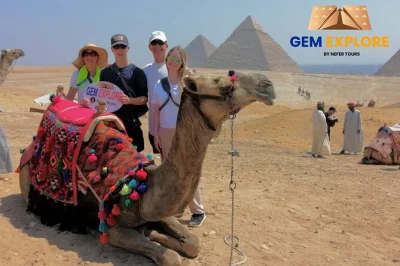 Cairo: Giza Pyramids, Grand Egyptian Museum & Bazaar Tour
★★★★★★★★★★ 4.94 (159) From US$ 60
Cairo: Giza Pyramids, Grand Egyptian Museum & Bazaar Tour
★★★★★★★★★★ 4.94 (159) From US$ 60
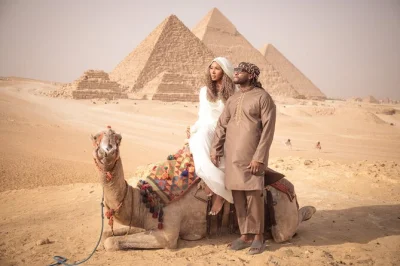 Cairo: Giza Pyramids, Memphis, Sakkara & Dahshur Day Trip
★★★★★★★★★★ 4.66 (422) From US$ 90
Cairo: Giza Pyramids, Memphis, Sakkara & Dahshur Day Trip
★★★★★★★★★★ 4.66 (422) From US$ 90
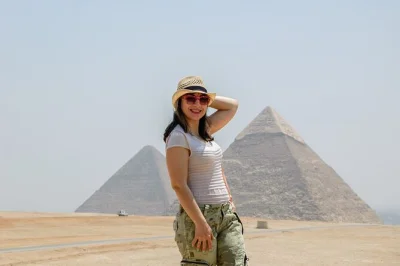 Cairo: Giza Pyramids & Sphinx Half-Day Tour with Egyptologist
★★★★★★★★★★ 4.94 (402) From US$ 18.75
Cairo: Giza Pyramids & Sphinx Half-Day Tour with Egyptologist
★★★★★★★★★★ 4.94 (402) From US$ 18.75
 Giza, Memphis & Saqqara: Private Day Trip with Lunch
★★★★★★★★★★ 4.87 (192) From US$ 15
Giza, Memphis & Saqqara: Private Day Trip with Lunch
★★★★★★★★★★ 4.87 (192) From US$ 15
 Cairo Pyramids & Grand Egyptian Museum Private Day Tour
★★★★★★★★★★ 4.90 (112) From US$ 14
Cairo Pyramids & Grand Egyptian Museum Private Day Tour
★★★★★★★★★★ 4.90 (112) From US$ 14
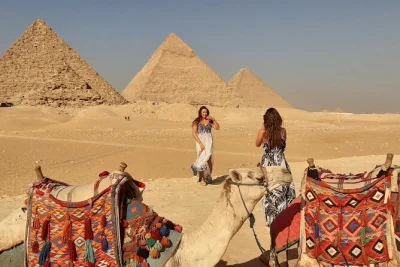 Giza Pyramids: Camel Ride, Quad Bike & Pyramid Entry Tour
★★★★★★★★★★ 4.96 (464) From US$ 15
Giza Pyramids: Camel Ride, Quad Bike & Pyramid Entry Tour
★★★★★★★★★★ 4.96 (464) From US$ 15
 Giza Pyramids & Sphinx: Private Tour with Camel Ride & Inside Pyramid
★★★★★★★★★★ 4.95 (375) From US$ 15
Giza Pyramids & Sphinx: Private Tour with Camel Ride & Inside Pyramid
★★★★★★★★★★ 4.95 (375) From US$ 15
 US$ 19


 Do you need help planning your next activity?


