
Cairo & Giza Pyramids Day Tour: Museum, Sphinx & Bazaar
 Super deal


Summary
Walk beside the Sphinx and wander Cairo’s old bazaar after seeing Tutankhamun’s gold
You’ll stand beneath the Giza Pyramids as your guide shares stories lost to time, stare into the eyes of the Sphinx, get swept up in Cairo’s museum treasures (including Tutankhamun’s gold), and end your day wandering Khan el-Khalili’s wild bazaar scents. It’s not just sightseeing—it feels like touching history.
 8h–10h

Step-by-step itinerary
Day 1 — Visit Giza Pyramids and Cairo sites
- Pickup from hotel at 8:00 am
- Visit Great Pyramids of Cheops, Chephren, Mykerinos
- Explore Valley Temple and Sphinx close-up
- Tour Khufu's pyramid complex
- Tour Menkaure's pyramid complex
- Tour Khafre's pyramid complex
- Panoramic view of the pyramids
- Visit Egyptian Museum artifacts and Tutankhamun exhibit
- Stroll through Khan el-Khalili Bazaar
- Drop off at hotel

Top questions

How long does this Cairo & Giza Pyramids day tour last?
The full-day tour typically starts at 8:00 am with pickup from your hotel and ends in the late afternoon or early evening with drop-off.
Is hotel pickup included for this Cairo pyramids tour?
Yes, hotel pickup and drop-off in Cairo or Giza are included with private transportation.
Which sites are visited on this day trip?
You visit the Giza Pyramids (Cheops, Chephren & Mykerinos), Great Sphinx of Giza, Egyptian Museum, and Khan el-Khalili bazaar.
Are entrance fees included?
Yes, all entrance fees to sites listed in the itinerary are included in your booking.
Is lunch included on this tour?
No set lunch is included but there is free time for lunch; your guide can recommend local spots.
Will we have an English-speaking guide?
Yes, your private guide speaks English (and often other languages) throughout the tour.
Is this tour suitable for children or elderly travelers?
The tour is suitable for most fitness levels but not recommended for travelers with spinal injuries or poor cardiovascular health.
Can you use public transport instead?
This tour uses private air-conditioned vehicles; public transport options exist nearby but aren’t part of this package.

What’s included
Your day includes private hotel pickup and drop-off in Cairo or Giza by air-conditioned vehicle, entry fees to all major sites—the Giza Pyramids complex, Egyptian Museum, Sphinx area—and bottled water along the way. A local guide stays with you throughout to share stories and help navigate every stop before returning you safely back at your hotel.

We started right outside our hotel in Cairo—our guide, Ahmed, was already waving from a dusty white van (air-conditioned, thank god). He handed us cold bottled water before we even asked. Driving out to the Giza Pyramids felt almost surreal; the city noise just sort of faded behind us until it was mostly wind and a few distant horns. The first thing that hit me stepping onto the plateau wasn’t what I expected—it was the dry smell of sun-baked stone, older than anything I’d ever touched. Ahmed pointed out which pyramid belonged to Cheops, Chephren, and Mykerinos. He told us stories about how each one had its own quirks—apparently Khafre’s still has some casing stones left at the top if you squint. I tried to imagine building these with just bare hands and ramps… it made my head spin a little.
The Sphinx is both smaller and stranger up close than in photos—its nose really is missing (Ahmed joked that Napoleon didn’t do it but everyone blames him anyway). There were school kids nearby practicing English on us (“Welcome to Egypt!”) and someone selling postcards with camels on them. The sand kept getting into my shoes. We wandered around for ages—I lost track of time honestly—and then headed back into town for the Egyptian Museum. Walking through those halls felt like being inside a giant jewelry box: gold everywhere, weirdly quiet except for whispers in Arabic and French. Tutankhamun’s mask is way shinier than I thought; I stood there longer than I meant to.
Lunch was quick—falafel sandwiches from a little shop Ahmed liked (he insisted we try their pickled turnips). After that we ended up at Khan el-Khalili bazaar. It’s chaos but in a good way: brass lamps hanging overhead, men calling out prices, spices piled high like tiny volcanoes. I tried bargaining for a scarf but probably paid too much; Ahmed just laughed and said it’s part of the fun. Somewhere between all the noise and colors I realized how tired my feet were—but also how much I didn’t want to leave yet.
Similar tours
 Cairo & Giza: Pyramids, Egyptian Museum & Khan el-Khalili Tour
★★★★★★★★★★ 4.74 (185) From US$ 15
Cairo & Giza: Pyramids, Egyptian Museum & Khan el-Khalili Tour
★★★★★★★★★★ 4.74 (185) From US$ 15
 Private 2-Day Cairo Tour from Hurghada: Pyramids, Museum & Bazaar
★★★★★★★★★★ 5.00 (3) From US$ 450
Private 2-Day Cairo Tour from Hurghada: Pyramids, Museum & Bazaar
★★★★★★★★★★ 5.00 (3) From US$ 450
 Cairo: Giza Pyramids, Memphis, Sakkara & Dahshur Day Trip
★★★★★★★★★★ 4.66 (422) From US$ 90
Cairo: Giza Pyramids, Memphis, Sakkara & Dahshur Day Trip
★★★★★★★★★★ 4.66 (422) From US$ 90
 Giza, Memphis & Saqqara: Private Day Trip with Lunch
★★★★★★★★★★ 4.87 (192) From US$ 15
Giza, Memphis & Saqqara: Private Day Trip with Lunch
★★★★★★★★★★ 4.87 (192) From US$ 15
 Cairo: Giza Pyramids, Grand Egyptian Museum & Bazaar Tour
★★★★★★★★★★ 4.94 (159) From US$ 60
Cairo: Giza Pyramids, Grand Egyptian Museum & Bazaar Tour
★★★★★★★★★★ 4.94 (159) From US$ 60
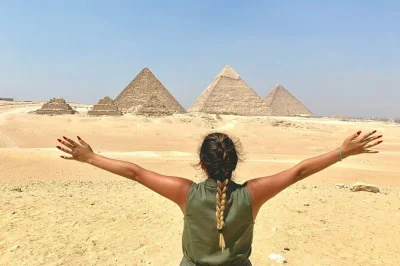 Giza Pyramids, Sphinx & Memphis: Private Day Tour with Lunch
★★★★★★★★★★ 4.98 (163) From US$ 95
Giza Pyramids, Sphinx & Memphis: Private Day Tour with Lunch
★★★★★★★★★★ 4.98 (163) From US$ 95
 Cairo Pyramids & Grand Egyptian Museum Private Day Tour
★★★★★★★★★★ 4.90 (112) From US$ 14
Cairo Pyramids & Grand Egyptian Museum Private Day Tour
★★★★★★★★★★ 4.90 (112) From US$ 14
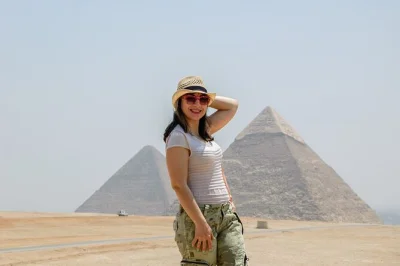 Cairo: Giza Pyramids & Sphinx Half-Day Tour with Egyptologist
★★★★★★★★★★ 4.94 (402) From US$ 18.75
Cairo: Giza Pyramids & Sphinx Half-Day Tour with Egyptologist
★★★★★★★★★★ 4.94 (402) From US$ 18.75
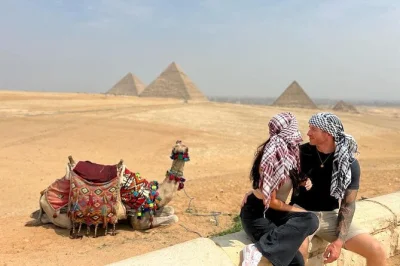 Giza Pyramids & Sphinx: Private Tour, Camel Ride & Pyramid Entry
★★★★★★★★★★ 4.84 (490) From US$ 10
Giza Pyramids & Sphinx: Private Tour, Camel Ride & Pyramid Entry
★★★★★★★★★★ 4.84 (490) From US$ 10
 Giza Pyramids & Sphinx: Private Tour with Camel Ride & Inside Pyramid
★★★★★★★★★★ 4.95 (375) From US$ 10
Giza Pyramids & Sphinx: Private Tour with Camel Ride & Inside Pyramid
★★★★★★★★★★ 4.95 (375) From US$ 10
 Giza Pyramids: Private Tour with Camel Ride & Lunch
★★★★★★★★★★ 5.00 (121) From US$ 5
Giza Pyramids: Private Tour with Camel Ride & Lunch
★★★★★★★★★★ 5.00 (121) From US$ 5
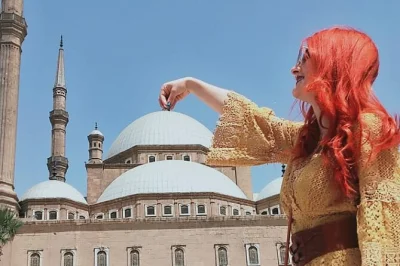 2-Day Cairo Private Tour: Pyramids, Museum & Khan El Khalili
★★★★★★★★★★ 4.75 (4) From US$ 400
2-Day Cairo Private Tour: Pyramids, Museum & Khan El Khalili
★★★★★★★★★★ 4.75 (4) From US$ 400


 Do you need help planning your next activity?


