
Korcula: Wine Tasting Tour with 3 Wineries & Island Views
 Super deal


Summary
Family wineries, rare grapes, panoramic rides across Korcula
You’ll ride across Korcula by open-top minibus with a local guide, tasting rare wines like Pošip and Grk at three very different wineries—including family estates and a lively cooperative. Expect homemade honey, olive oil, laughter over language slips, and sweeping views of bays and vineyards you might not forget soon.
 4h
4h

Step-by-step itinerary
Day 1 — Korcula wine tasting and sightseeing
- Pickup within 5 km of Korcula Town
- Travel in open-top panoramic minibus
- Visit Korcula town viewpoint
- Explore inland hamlets
- Drive scenic road to Pupnatska Luka bay
- Taste wines at three wineries
- Sample local honey, liqueurs, and olive oil
- Return to Korcula Town

Top questions

How long is the Korcula wine & sightseeing tour?
The tour lasts about four hours, departing at 11:00 and returning around 15:00.
Are hotel pickups included in the Korcula wine tour?
Yes, free pickup is included within 5 km of Korcula Town.
Which wines are tasted on this tour?
You’ll try local varieties such as Pošip, Grk, Rukatac, Plavac Mali plus liqueurs and honey.
Is lunch provided during the wine tasting tour?
No full lunch is included but there are tastings of wine, honey, olive oil, jams and homemade sweets.
Is the tour suitable for people with limited mobility?
The tour is wheelchair accessible with specialized infant seats available if needed.
What regions of Korcula does the tour visit?
The route covers Smokvica region vineyards, inland hamlets, Lumbarda area for Grk grapes and Pupnatska Luka bay viewpoint.
How many wineries do we visit?
You’ll visit three wineries: two small family estates plus one cooperative winery.
Can children join this wine tour?
Children can join but only guests 18+ may participate in wine tasting; infants must sit on an adult’s lap.

What’s included
Your day includes hotel pickup within 5 km of Korcula Town before setting out by panoramic minibus with your guide. You’ll taste wines at three different wineries—sampling Pošip, Grk, Rukatac—and enjoy local honey, olive oil, liqueurs and homemade sweets along the way before being dropped back after four hours exploring the island’s heart.

I didn’t really know what to expect from a wine tour on Korcula—just that I’d heard about Pošip and Grk, and honestly, the idea of riding around in an open-top minibus sounded too fun to pass up. When our guide Marko pulled up (right on time, which surprised me for island life), he greeted us with this easy smile and a wave that felt like we already knew him. The air smelled faintly of wild herbs as we set off through Smokvica’s patchwork vineyards. I kept thinking how the light bounced off those stone walls—kind of blinding but beautiful.
The first stop was a tiny family estate where the owner’s mother poured our glasses with this proud little nod. I tried to say “hvala” and she laughed—probably at my accent. We tasted Pošip there, cold and sharp at first sip, almost salty like the sea breeze rolling in from somewhere nearby. There was homemade honey too; it stuck to my fingers longer than expected. Marko told us stories about old vines disappearing and how Rukatac is getting harder to find every year. I didn’t realize wine could feel so tied to memory and loss.
We zigzagged through sleepy hamlets where laundry flapped across narrow lanes—one old man waved as if he does it every day. At the cooperative winery, things were louder: clinking glasses, someone’s radio playing something folky in the background. Tasting Grk here felt different—almost sandy on the tongue (Marko said it only grows in Lumbarda’s soil). The drive down toward Pupnatska Luka made everyone go quiet for a minute—the bay just opens up below you out of nowhere. I still think about that view sometimes when I’m back home staring at my kitchen tiles.
Similar tours
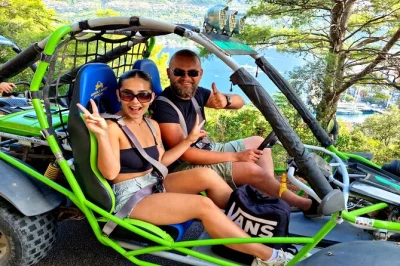 Korcula: Buggy Safari Tour with Local Food & Wine Tasting
★★★★★★★★★★ 4.94 (312) From US$ 125.70
Korcula: Buggy Safari Tour with Local Food & Wine Tasting
★★★★★★★★★★ 4.94 (312) From US$ 125.70
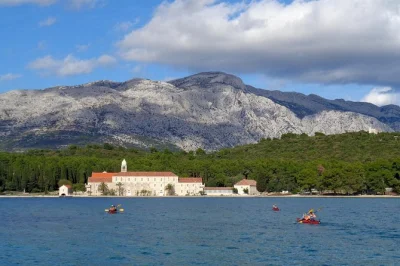 Korčula Kayak Tour: Island Quarries, Monastery & Grk Wine
★★★★★★★★★★ 4.99 (190) From US$ 76.36
Korčula Kayak Tour: Island Quarries, Monastery & Grk Wine
★★★★★★★★★★ 4.99 (190) From US$ 76.36
 Cetina River: Rafting & Canyoning Day Trip with Pickup
★★★★★★★★★★ 4.99 (162) From US$ 103.38
Cetina River: Rafting & Canyoning Day Trip with Pickup
★★★★★★★★★★ 4.99 (162) From US$ 103.38
 Korčula: Boat Tour with Swim, Grill & Homemade Wine
★★★★★★★★★★ 4.89 (119) From US$ 115.13
Korčula: Boat Tour with Swim, Grill & Homemade Wine
★★★★★★★★★★ 4.89 (119) From US$ 115.13
 Krka Waterfalls Day Trip from Split with Wine & Lunch
★★★★★★★★★★ 4.99 (117) From US$ 158.60
Krka Waterfalls Day Trip from Split with Wine & Lunch
★★★★★★★★★★ 4.99 (117) From US$ 158.60
 Split to Krka: Waterfalls, Boat & Dalmatian Wine Tasting
★★★★★★★★★★ 4.91 (10526) From US$ 44.94
Split to Krka: Waterfalls, Boat & Dalmatian Wine Tasting
★★★★★★★★★★ 4.91 (10526) From US$ 44.94
 Dubrovnik: Old Town Food & Wine Walking Tour with Tastings
★★★★★★★★★★ 4.95 (690) From US$ 164.47
Dubrovnik: Old Town Food & Wine Walking Tour with Tastings
★★★★★★★★★★ 4.95 (690) From US$ 164.47
 Dubrovnik Old Town: Food Tour with Tastings & Wine
★★★★★★★★★★ 4.83 (450) From US$ 164.47
Dubrovnik Old Town: Food Tour with Tastings & Wine
★★★★★★★★★★ 4.83 (450) From US$ 164.47
 Split: Food & History Walking Tour with Market & Wine
★★★★★★★★★★ 4.85 (406) From US$ 135.10
Split: Food & History Walking Tour with Market & Wine
★★★★★★★★★★ 4.85 (406) From US$ 135.10
 Zagreb Food Tour: Old Town Walk & Croatian Wine Tastings
★★★★★★★★★★ 4.80 (219) From US$ 104.56
Zagreb Food Tour: Old Town Walk & Croatian Wine Tastings
★★★★★★★★★★ 4.80 (219) From US$ 104.56
 Dubrovnik: Sunset Wine Tasting Tour & Srđ Mountain Views
★★★★★★★★★★ 4.99 (178) From US$ 64.61
Dubrovnik: Sunset Wine Tasting Tour & Srđ Mountain Views
★★★★★★★★★★ 4.99 (178) From US$ 64.61
 Dubrovnik to Peljesac: Small Group Wine Tour with Tastings
★★★★★★★★★★ 4.92 (160) From US$ 176.22
Dubrovnik to Peljesac: Small Group Wine Tour with Tastings
★★★★★★★★★★ 4.92 (160) From US$ 176.22


 Do you need help planning your next activity?


