
Santiago Yungay Walking Tour: Street Art, Bars & History
 Super deal


Summary
Yungay’s murals, old plazas and bohemian corners on foot
You’ll wander Santiago’s Yungay neighborhood with a local guide who knows every shortcut and story. Expect powerful street art, real conversations in hidden squares, glimpses of daily life, plus time near bars and restaurants at the finish. It’s two hours that feel like stepping into someone else’s everyday world—and maybe not wanting to leave just yet.
 2h
2h

Step-by-step itinerary
Day 1 — Walking tour of Yungay neighborhood
- Meet at Parque Quinta
- Visit Museum of Memory and Human Rights
- Explore 1920s Passage with art
- Stop at classic Yungay restaurant
- Visit main Yungay square
- See old palace architecture
- Explore art-filled square with bars
- End at Concha y Toro neighborhood

Top questions

How long does the Yungay walking tour last?
The tour lasts approximately 2 hours from start to finish.
Is a local guide included in the Santiago Yungay walking tour?
Yes, your tour includes a knowledgeable local guide throughout.
Where does the walking tour start?
The meeting point is at Parque Quinta Normal in Santiago.
Does this tour visit the Museum of Memory & Human Rights?
Yes, you’ll stop by the Museum of Memory & Human Rights during the walk.
Are there places to eat or drink during or after the tour?
You’ll pass several bars and restaurants near Barrio Brasil and Concha y Toro at the end point.
Is this day trip suitable for all fitness levels?
Yes, it’s suitable for all physical fitness levels as it’s mostly flat walking.
Are service animals allowed on this walking tour?
Yes, service animals are allowed on this tour.
Can I reach the meeting point by public transportation?
Yes, public transportation options are available nearby Parque Quinta Normal.

What’s included
Your two-hour Santiago Yungay walking tour includes a friendly local guide from start to finish; you’ll meet at Parque Quinta Normal with easy access by public transport. Along the way you’ll explore museums, plazas full of street art, classic restaurants (yes—with hairdressers!), and end near plenty of lively bars and eateries for whatever comes next.

“Wait, is that a hairdresser or a restaurant?” That was the first thing I blurted out when we stopped outside this old spot in Barrio Yungay. Our guide—Miguel, who seemed to know every neighbor by name—just grinned and said both. The whole place smelled faintly of coffee and something sweet baking nearby. We’d started at Parque Quinta Normal (so many families out with dogs) and wandered toward the Museum of Memory and Human Rights. I didn’t expect to feel so quiet there, reading the plaques while schoolkids rushed past in their uniforms.
The street art really hit me after that—huge bursts of color on cracked walls, some faces I recognized from Chilean history, others just wild shapes. Miguel pointed out which ones had been painted over by new artists (“It’s like a conversation,” he said). The air felt cooler in the narrow passages from the 1920s; you could almost hear old radios through open windows if you listened hard enough. We passed a tiny square where an older couple played chess under a jacaranda tree—purple petals everywhere. Someone selling sopaipillas waved us over but we kept moving toward Plaza Yungay.
I think my favorite part was how nothing felt staged. Even the Concha y Toro neighborhood at the end—those faded palaces with chipped paint and iron balconies—felt lived-in, not polished up for tourists. Miguel told us about parties in the square (“sometimes too loud,” he admitted), and pointed out bars tucked behind murals where people were already laughing inside though it was barely noon. I still think about those colors and that feeling of walking somewhere that belongs to itself first, you know?
Similar tours
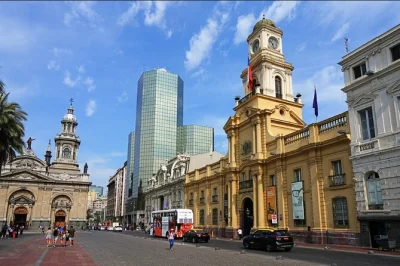 Santiago: City Tour with San Cristobal Hill Cable Car & Art Stops
★★★★★★★★★★ 4.89 (156) From US$ 160
Santiago: City Tour with San Cristobal Hill Cable Car & Art Stops
★★★★★★★★★★ 4.89 (156) From US$ 160
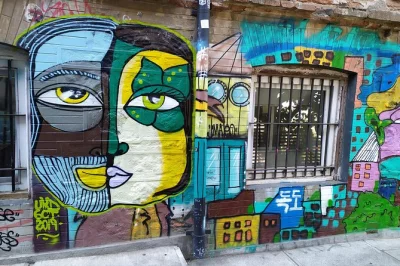 Valparaiso & Viña del Mar: Private Day Tour from Santiago
★★★★★★★★★★ 4.95 (141) From US$ 280
Valparaiso & Viña del Mar: Private Day Tour from Santiago
★★★★★★★★★★ 4.95 (141) From US$ 280
 Santiago: Hop On Hop Off City Bus Day Ticket & Top Stops
★★★★★★★★★★ 4.63 (1963) From US$ 115
Santiago: Hop On Hop Off City Bus Day Ticket & Top Stops
★★★★★★★★★★ 4.63 (1963) From US$ 115
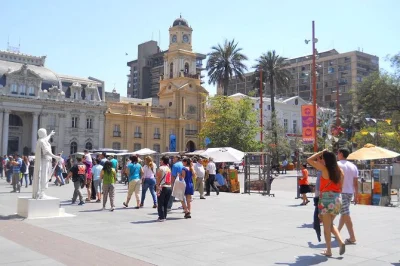 Santiago: Private City Tour, Central Market & San Cristobal Hill
★★★★★★★★★★ 4.94 (294) From US$ 149.34
Santiago: Private City Tour, Central Market & San Cristobal Hill
★★★★★★★★★★ 4.94 (294) From US$ 149.34
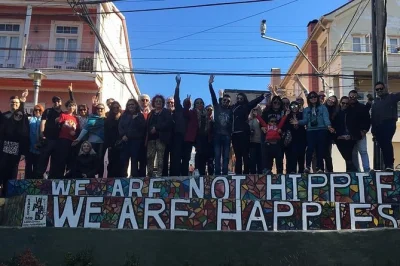 Valparaíso & Viña del Mar Day Trip from Santiago with Guide
★★★★★★★★★★ 4.58 (330) From US$ 31.50
Valparaíso & Viña del Mar Day Trip from Santiago with Guide
★★★★★★★★★★ 4.58 (330) From US$ 31.50
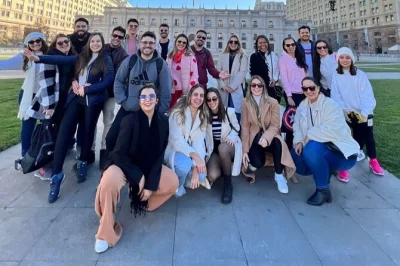 Santiago City Tour: Historic Center, Santa Lucia Hill & Lastarria
★★★★★★★★★★ 5.00 (211) From US$ 30
Santiago City Tour: Historic Center, Santa Lucia Hill & Lastarria
★★★★★★★★★★ 5.00 (211) From US$ 30
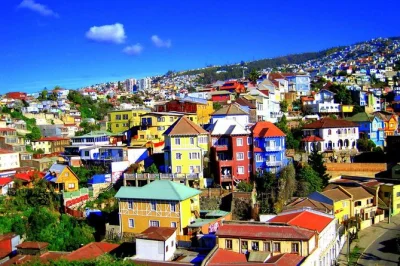 Valparaiso & Viña del Mar: Port Walks, Street Art & Casablanca Wine
★★★★★★★★★★ 4.86 (7893) From US$ 67.50
Valparaiso & Viña del Mar: Port Walks, Street Art & Casablanca Wine
★★★★★★★★★★ 4.86 (7893) From US$ 67.50
 Valparaiso & Viña del Mar Day Trip from Santiago with Beach Stop
★★★★★★★★★★ 4.52 (124) From US$ 40
Valparaiso & Viña del Mar Day Trip from Santiago with Beach Stop
★★★★★★★★★★ 4.52 (124) From US$ 40
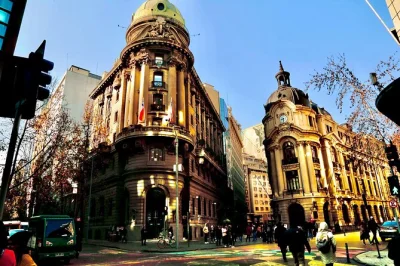 Santiago City Tour: Half-Day Landmarks & Local Snack with Pickup
★★★★★★★★★★ 4.77 (535) From US$ 290
Santiago City Tour: Half-Day Landmarks & Local Snack with Pickup
★★★★★★★★★★ 4.77 (535) From US$ 290
 Santiago: City Bike Tour, La Moneda & Lastarria with Ice Cream
★★★★★★★★★★ 4.89 (288) From US$ 43.74
Santiago: City Bike Tour, La Moneda & Lastarria with Ice Cream
★★★★★★★★★★ 4.89 (288) From US$ 43.74
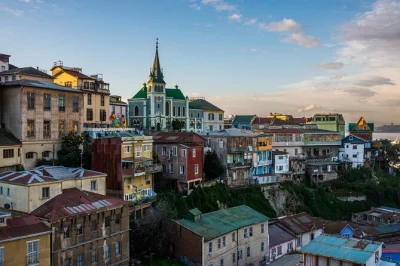 Valparaíso, Viña del Mar & Casablanca: Small Group Day Trip
★★★★★★★★★★ 4.67 (195) From US$ 180
Valparaíso, Viña del Mar & Casablanca: Small Group Day Trip
★★★★★★★★★★ 4.67 (195) From US$ 180
 Valparaiso & Viña del Mar Day Trip from Santiago with Lunch
★★★★★★★★★★ 4.72 (100) From US$ 51
Valparaiso & Viña del Mar Day Trip from Santiago with Lunch
★★★★★★★★★★ 4.72 (100) From US$ 51


 Do you need help planning your next activity?


