

 +507 6792-0894


Sarajevo: Walking Tour with Local Guide & Multicultural Stories


Summary
Discover Sarajevo’s cultures by walking with a local guide
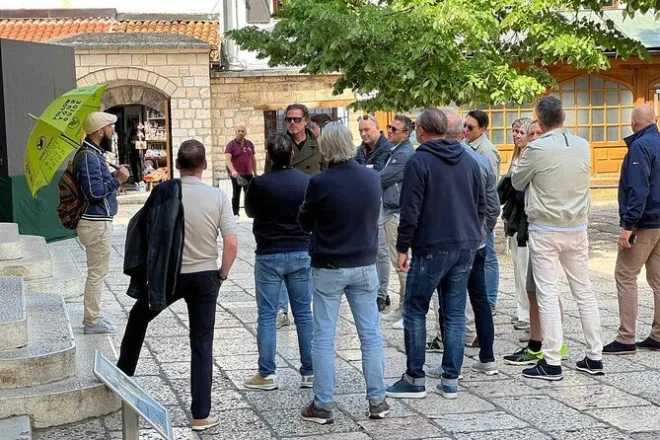
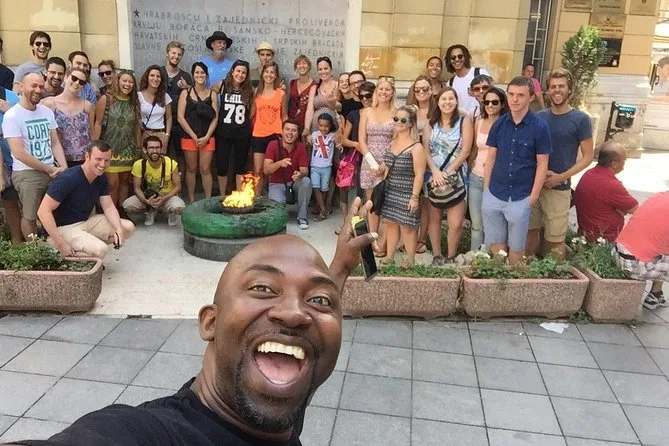
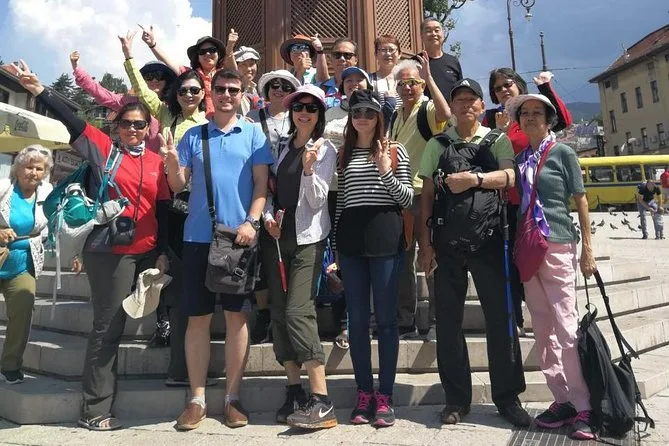
You’ll walk through Sarajevo’s tangled streets with a local guide who shares stories behind every corner — from mosques to cathedrals to coppersmiths’ shops. You’ll taste water from Sebilj fountain, hear echoes of history at Latin Bridge, and feel how cultures overlap here. It’s not always easy or pretty, but it sticks with you long after.

I didn’t expect the first thing I’d notice in Sarajevo to be the way church bells and the call to prayer sort of overlap — not competing, just sharing the air. Our guide, Adnan, grinned when he saw me looking up at the Cathedral of Jesus’ Sacred Heart. “You’ll see,” he said, “here we walk past three religions in five minutes.” He wasn’t kidding. The Orthodox church was just around the corner, and then suddenly we were ducking into the old Jewish synagogue that’s now a museum. The stone inside felt cool even though it was warm outside.
We stopped at Ferhadija Street where Adnan pointed out this brass line in the pavement — “Sarajevo Meeting of Cultures.” It’s not subtle, but I liked that about it. He told us how Ottoman and Austro-Hungarian influences still shape everything from architecture to coffee rituals (which I definitely failed at — too much sugar). The Gazi Husrev-beg Mosque was busy with people coming and going; shoes lined up outside, sunlight bouncing off them. I tried to imagine what it must have been like here centuries ago, but honestly, it’s enough just watching people now.
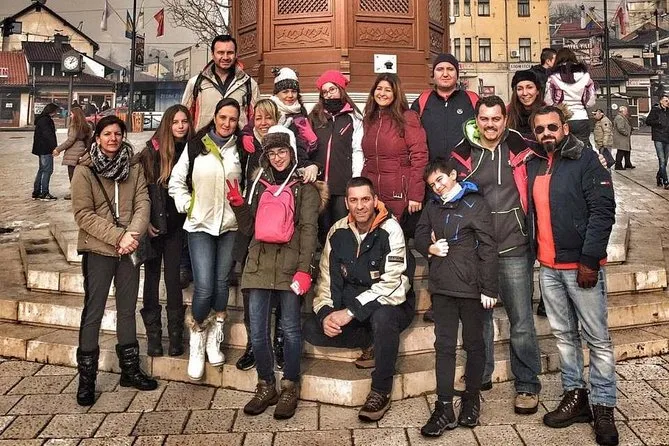
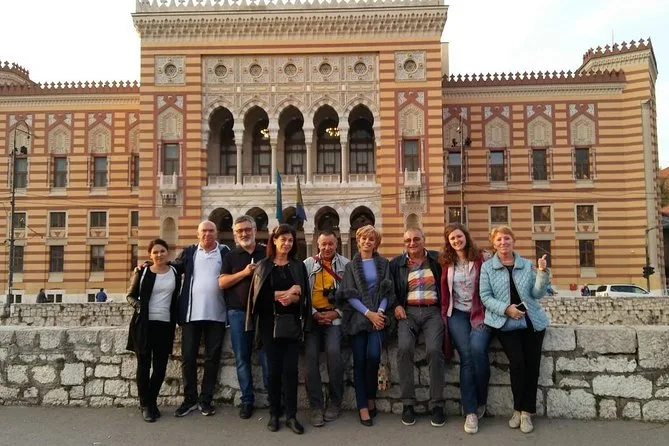
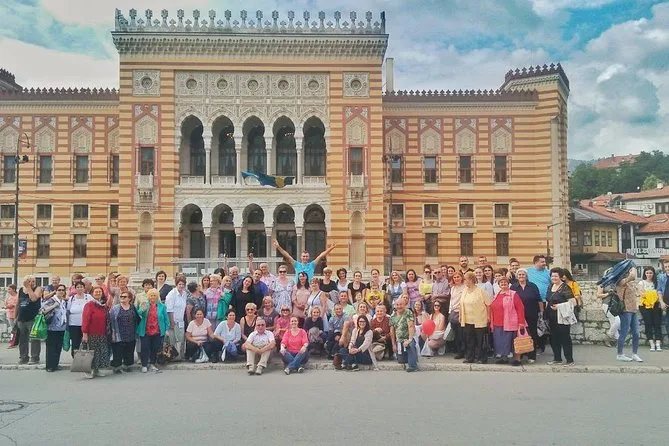
Baščaršija Square smelled like grilled meat and strong coffee. There’s this wooden fountain — Sebilj — where pigeons gather and kids run circles around their parents. We wandered down Coppersmith Street next; you can actually hear hammers tapping metal before you see anything. One old man waved us over to show how he etches patterns into a tray (I think he winked at me when I tried to say thank you in Bosnian). The city hall looked almost too grand for its own good — all arches and colors that don’t quite match but somehow work together.
The Latin Bridge felt heavier than I expected. Adnan paused there longer than usual and told us about Gavrilo Princip and that day in 1914 — his voice got quieter for a second. There are these red marks on the pavement called Sarajevo Roses; they’re from mortar shells during the siege, filled in with resin so they look like flowers. It’s strange how something so sad can look beautiful if you don’t know what it means right away.
 1h–2h
1h–2h

Step-by-step itinerary
Day 1 — Sarajevo City Highlights Walking Tour
- Visit Cathedral of Jesus' Sacred Heart
- Explore Museum of Jews of Bosnia
- See Sarajevo Meeting of Cultures
- Visit Gazi Husrev-beg Mosque
- View Sebilj Fountain
- Walk Coppersmith Street
- Tour Sarajevo City Hall (Vijećnica)
- See Spite House near Popular Bridge
- Visit Emperor’s Mosque
- Walk Latin Bridge (Principov Most)
- Shop at Gazi Husrev-beg's Bezistan
- See Taslihan Waqf Complex
- View Austro-Hungarian Hotel Building
- Visit Cathedral Church of Nativity
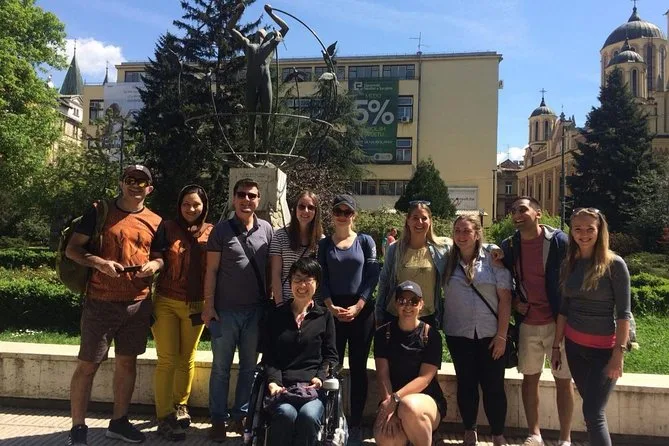
- See Multiethnic Human Monument
- View Sarajevo Rose Memorial

Top questions

How long is the Sarajevo walking tour?
The tour covers key sites in central Sarajevo within a few hours on foot.
Is this walking tour wheelchair accessible?
Yes, transportation options and most routes are wheelchair accessible.
What attractions are included on this Sarajevo tour?
You’ll visit places like Gazi Husrev-beg Mosque, Latin Bridge, Sebilj fountain, city hall, coppersmith street, cathedrals, and more.
Does the tour include a local guide?
Yes, a professional local guide leads your group throughout the experience.
Are children or infants allowed on this walking tour?
Yes, infants can ride in prams or strollers; families are welcome.
Is public transportation nearby for reaching the meeting point?
Yes, public transportation options are available close to the starting area.

What’s included
Your day includes a friendly local guide who knows Sarajevo inside out; all guiding services; accessibility for wheelchairs or strollers; and plenty of chances to ask questions or linger over details as you go along.
 Super deal
  Free booking, free cancellation.
  Don't lose your place.


 Do you need help planning your next activity?
  +507 6792-0894


