
Buenos Aires: Walking History Tour with Local Stories
 Super deal


Summary
Walk Buenos Aires’ layered streets and share stories with locals
You’ll wander Buenos Aires’ oldest streets with a university-trained local guide who actually wants your questions—expect real conversations about history, memory, and daily life. From Parque Lezama to Casa Rosada, feel the weight of Argentina’s past as you pass plazas, markets, churches, and riverside bridges. This isn’t just facts—it’s laughter, quiet moments, and unexpected details you’ll carry home.
 3h–3h 10m

Step-by-step itinerary
Day 1 — Explore Buenos Aires historical sites
- Visit old town of Buenos Aires
- Start at first fort site
- See Parque Lezama
- Visit Swedish church
- Explore former clandestine center
- Visit colonial catholic church
- Walk through old town's main square
- Explore local market by Italian immigrants
- See Woman's Bridge in Puerto Madero
- Visit Casa Rosada president's office

Top questions

Is this Buenos Aires walking tour wheelchair accessible?
Yes, the tour is wheelchair accessible throughout all stops.
Does this tour include Plaza Dorrego and Casa Rosada?
Yes, both Plaza Dorrego and Casa Rosada are included in the itinerary.
Who leads this Buenos Aires history tour?
A university degree guide leads every group on this walking tour.
Are infants or small children allowed on this tour?
Yes, infants and small children can join in strollers or prams.
Will I learn about Argentina's dictatorship period?
Yes, you’ll visit a former clandestine detention center from 1976-1979.
Is public transportation available near the meeting point?
Yes, public transportation options are available nearby.
How long is the walking distance covered during this tour?
The exact distance isn’t specified but it covers several central neighborhoods on foot.
Are service animals allowed on this Buenos Aires city walk?
Yes, service animals are allowed throughout the experience.

What’s included
Your day includes guidance from a university-trained local who encourages questions (no silent marching here), visits to places like Parque Lezama, Plaza Dorrego, Puerto Madero’s Woman’s Bridge by Calatrava, plus time at Casa Rosada—all easily accessible whether you’re walking or rolling along with a stroller or wheelchair.

I blinked and there we were, standing at Parque Lezama, the trees heavy with that early morning dampness you only get near the river. Our guide, Lucía, waved us over—she had this way of talking like she was letting you in on family secrets. She pointed to a patch of grass and said, “This is where it all began in 1536.” I could almost hear the echoes of old footsteps under the traffic noise. Someone asked about the first people here, and Lucía just smiled—“That’s a long answer,” she said, so we kept walking.
The Swedish church surprised me (I didn’t expect to see that in Buenos Aires), and then suddenly we were outside this plain-looking building. Lucía lowered her voice: “This was a clandestine detention center during the dictatorship.” There was a moment where nobody spoke—the air felt heavier, even though it was just another street. I caught myself glancing at my shoes. Then someone cracked a nervous joke about getting lost in San Telmo’s markets, and just like that we were moving again, past stalls selling empanadas and old tango records.
We reached Plaza Dorrego where old men played chess under jacaranda trees—one of them winked at me when I tried to count his pieces (I lost track). The smell of coffee drifted from somewhere nearby. At Puerto Madero, sunlight bounced off the Woman’s Bridge and Lucía told us how Calatrava designed it to look like a couple dancing tango. I still think about that view sometimes—how the city feels both old and new at once.
By the time we got to Casa Rosada, kids were feeding pigeons on the steps and someone in our group asked about Evita. Lucía laughed (“That’s another story!”) and promised to tell us more if we bought her a coffee later. We never did get all our questions answered but maybe that’s what keeps Buenos Aires interesting—you leave with more stories than you came for.
Similar tours
 Buenos Aires: Old City Bike Tour San Telmo, La Boca & Mate
★★★★★★★★★★ 4.96 (118) From US$ 55
Buenos Aires: Old City Bike Tour San Telmo, La Boca & Mate
★★★★★★★★★★ 4.96 (118) From US$ 55
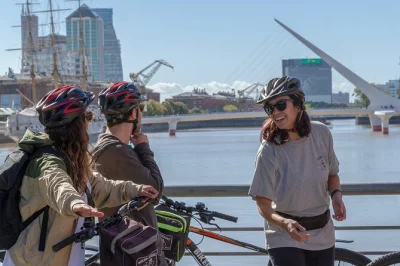 Buenos Aires: Full Day Bike, Food & Culture Small Group
★★★★★★★★★★ 4.97 (174) From US$ 110
Buenos Aires: Full Day Bike, Food & Culture Small Group
★★★★★★★★★★ 4.97 (174) From US$ 110
 Buenos Aires: South City Bike Tour with Caminito & La Boca
★★★★★★★★★★ 4.97 (286) From US$ 45
Buenos Aires: South City Bike Tour with Caminito & La Boca
★★★★★★★★★★ 4.97 (286) From US$ 45
 Buenos Aires: Private City Tour with Recoleta & Caminito
★★★★★★★★★★ 4.87 (3911) From US$ 120
Buenos Aires: Private City Tour with Recoleta & Caminito
★★★★★★★★★★ 4.87 (3911) From US$ 120
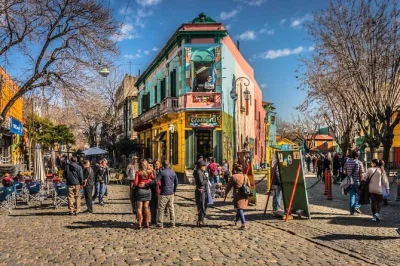 Buenos Aires: Private City Tour with Recoleta, Caminito & Leather Factory
★★★★★★★★★★ 4.95 (414) From US$ 109
Buenos Aires: Private City Tour with Recoleta, Caminito & Leather Factory
★★★★★★★★★★ 4.95 (414) From US$ 109
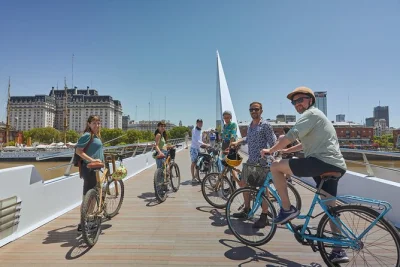 Buenos Aires: South City Bike Tour San Telmo, La Boca & Mate Stop
★★★★★★★★★★ 4.98 (98) From US$ 56
Buenos Aires: South City Bike Tour San Telmo, La Boca & Mate Stop
★★★★★★★★★★ 4.98 (98) From US$ 56
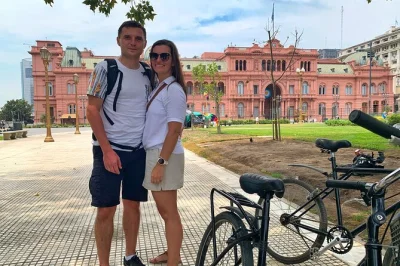 Buenos Aires: Half-Day Bike Tour City Highlights & La Boca
★★★★★★★★★★ 4.88 (1177) From US$ 45
Buenos Aires: Half-Day Bike Tour City Highlights & La Boca
★★★★★★★★★★ 4.88 (1177) From US$ 45
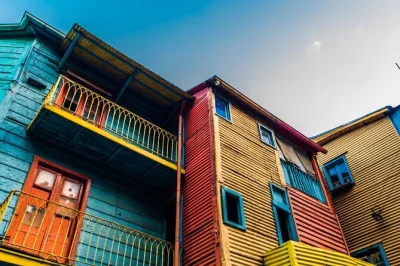 Buenos Aires: Small Group City Tour with San Telmo & La Boca
★★★★★★★★★★ 4.66 (575) From US$ 37
Buenos Aires: Small Group City Tour with San Telmo & La Boca
★★★★★★★★★★ 4.66 (575) From US$ 37
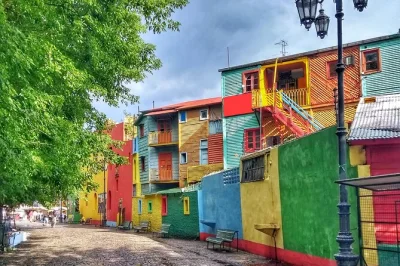 Buenos Aires: Private City Tour with La Boca & Recoleta
★★★★★★★★★★ 4.83 (389) From US$ 60
Buenos Aires: Private City Tour with La Boca & Recoleta
★★★★★★★★★★ 4.83 (389) From US$ 60
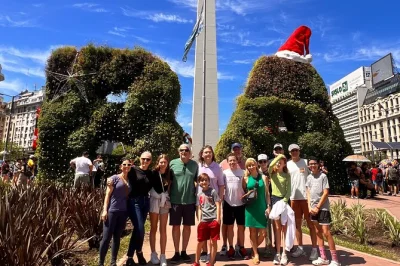 Buenos Aires: Private City Tour by Car with Flexible Stops
★★★★★★★★★★ 4.96 (228) From US$ 250
Buenos Aires: Private City Tour by Car with Flexible Stops
★★★★★★★★★★ 4.96 (228) From US$ 250
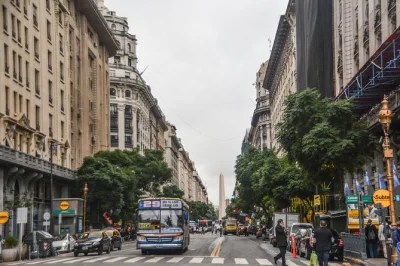 Buenos Aires: Private City Tour with Local Guide & Pickup
★★★★★★★★★★ 4.97 (236) From US$ 180
Buenos Aires: Private City Tour with Local Guide & Pickup
★★★★★★★★★★ 4.97 (236) From US$ 180
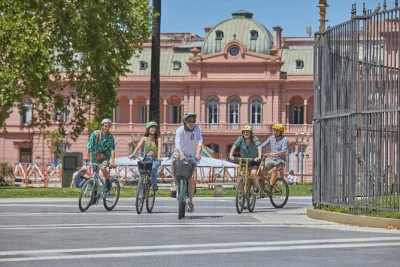 Buenos Aires: All-Day City Bike Tour with Lunch & Local Stops
★★★★★★★★★★ 4.96 (221) From US$ 115
Buenos Aires: All-Day City Bike Tour with Lunch & Local Stops
★★★★★★★★★★ 4.96 (221) From US$ 115


 Do you need help planning your next activity?


